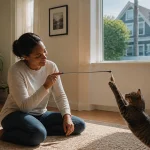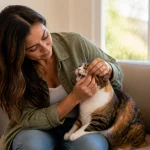
If you live in a drafty Victorian near Lake Merritt or a modern condo in Jack London Square, you know the look. It’s the "luggage look." Your cat, usually a master of aloofness, suddenly becomes a Velcro pet the second the suitcase comes out of the closet. In Oakland, where we love our weekend getaways to Tahoe or quick business trips across the bridge, this silent feline guilt trip is a rite of passage.
For years, cat parents in the East Bay faced a tough choice: do you bother your neighbor (who might forget the fresh water) or do you haul your territorial feline to a boarding facility where they’ll spend a week smelling strange dogs? Neither feels right. This guide is about the third option, the one that actually works for the modern cat. Finding reliable cat sitters in Oakland isn't just about finding someone to pour kibble; it’s about maintaining the sanctuary of your home while ensuring your cat doesn’t just survive your absence but thrives in it.
This post answers the "how, who, and how much" for people trying to find professional, stress-free care for their cats in the Bay Area.
By the end of this guide, you will learn:
- How to vet and select the most reliable cat sitters in Oakland and the surrounding Bay Area.
- The current market rates and logistical "must-haves" for professional in-home care.
- A step-by-step preparation plan to ensure your home and cat are ready for a sitter's arrival.
The State of Cat Care in the East Bay
The pet care industry has shifted dramatically over the last decade. According to the American Pet Products Association (APPA), Americans spent over $147 billion on their pets in 2023, with a significant portion of that going toward high-touch, personalized services [1]. In Oakland, this trend is even more pronounced. We aren't just looking for "pet sitters"; we are looking for feline specialists who understand that a cat is not just a small, low-maintenance dog.
The challenge is that the "gig economy" has flooded the market with hobbyists. While a teenager down the street might be well-meaning, professional cat sitting in San Francisco and Oakland requires a level of accountability that includes background checks, specialized insurance, and emergency protocols. When you hire someone through Mission Cats, you’re moving beyond the "friend-of-a-friend" model into a professional standard that protects both your pet and your property.

Pricing and What You’re Actually Paying For
Let’s talk numbers, because "how much" is usually the first question. Data from major platforms like Care.com shows that the average hourly rate for a cat sitter in Oakland sits around $20.02 as of late 2025 [2]. However, if you look at median costs for standard visits on platforms like Rover, you’re looking at roughly $31 per visit [5].
But here's the thing: price shouldn't be your only metric. A $15-per-visit sitter might save you $50 over a week, but do they have liability insurance? Do they know the difference between a cat that is "hiding" and a cat that is lethargic due to a urinary blockage? Professional services in the Bay Area, including specialized care in Walnut Creek and Palo Alto, factor in the cost of professional training and local expertise. You’re paying for the peace of mind that comes when a sitter notices the subtle signs of feline distress that a casual hobbyist would miss.
| Service Type | Average Rate (Oakland) | Best For |
|---|---|---|
| Standard 30-Min Visit | $25 – $35 | Multi-cat households, daily checks [5] |
| 60-Min Extended Visit | $45 – $60 | Seniors, kittens, or "social" cats [2] |
| Overnight Sitting | $85 – $150 | High-anxiety cats, medical needs [2] |
| Medication Administration | +$5 – $15 | Diabetic or chronic care cats [3] |
Why "In-Home" Beats Boarding Every Time
Cats are famously territorial. Research from the American Veterinary Medical Association (AVMA) suggests that environmental changes are a primary stressor for domestic felines, often leading to behavioral issues or stress-induced illnesses like cystitis [8]. When you take a cat to a boarding facility, you are removing them from their territory, subjecting them to the scents and sounds of other animals, and disrupting their core routine.
In-home care keeps the environment constant. Whether you need a cat sitter in Walnut Creek or a regular visitor in Oakland, the goal is "business as usual." The sitter enters the cat's space, follows the established feeding schedule, and provides interaction on the cat's terms. This is especially vital for the "scaredy cats" of the world who would spend an entire week behind a litter box in a boarding kennel.
Preparing the "Cat Cave" for Success
Success doesn't just happen; it's planned. A professional sitter needs more than just a key. They need a roadmap of your cat's life. Before you leave for your trip, you should have a "Meet and Greet", a standard practice for high-quality services in Palo Alto and San Francisco [3].
During this session, identify the following:
- The "Vanish" Spots: Where does your cat go when the doorbell rings?
- The Feeding Ritual: Does the wet food need to be mashed? Does the dry food go in a puzzle toy?
- Emergency Access: Where is the carrier? If there’s a medical emergency, which vet do you trust? In Oakland, proximity to 24-hour clinics like SAGE Veterinary Centers is a critical piece of information [9].

Vetting Your Sitter: The "Trust but Verify" Method
Don't be afraid to be a little "extra" during the interview process. Your home and your cat are at stake. A professional cat sitter in Palo Alto or Oakland should be able to provide proof of insurance and a clear background check [2].
Ask them: "What is your plan if my cat doesn't come out for two days?" A pro will tell you they monitor food intake and litter box usage as proxies for health when a cat is hiding. A hobbyist might just say, "Oh, I'm sure they're fine." You want the person who has a protocol for the "unseen" cat. This level of detail is what separates professional services from the casual apps [1].
The Evolution of Pet Care: A Timeline
Understanding how we got here helps explain why the standards are so much higher today.
- 1970s: The "boarding kennel" model dominates; in-home pet sitting is largely an informal neighborly favor.
- 1994: Pet Sitters International is founded, beginning the professionalization of the industry [10].
- 2005: The rise of specialized feline-only care begins to gain traction in urban hubs like San Francisco [11].
- 2011: Launch of major pet-sitting apps, making finding a sitter easier but complicating the vetting process for owners.
- 2020: The pandemic leads to a surge in "pandemic pets," increasing the demand for professional, reliable care as people return to travel [1].
- 2023: High-tech monitoring (cameras, smart feeders) becomes a standard integration for in-home sitting [1].
- 2025: Average rates for Oakland sitters stabilize at ~$20/hr, reflecting the high cost of living and professional standards in the Bay Area [2].
- 2026: In-home care is now the preferred method for feline welfare, surpassing traditional boarding in urban California [8].
Local Nuances: Navigating the Bay Area
Operating as a sitter in the Bay Area isn't the same as doing it in a rural town. There are parking logistics in Adams Point, security codes in high-rises in San Francisco, and specific weather considerations (like heat waves in Walnut Creek).
A local expert knows that an Oakland hills home might need extra attention during fire season, or that a Palo Alto home might have complex smart-home security that needs to be navigated. When you book through our reservations page, you're getting someone who understands the physical and logistical landscape of your specific neighborhood.

Case Study: The "Wallflower" of Rockridge
Take the case of "Barnaby," a ten-year-old Siamese mix in Oakland’s Rockridge neighborhood. Barnaby’s owners had tried a boarding facility once, and he returned home having lost two pounds and developed a stress-related respiratory infection [8].
When they switched to professional in-home care, the transition was night and day. The sitter spent the first two visits simply sitting on the floor in the same room as Barnaby, reading a book. By day three, Barnaby initiated contact. By using a consistent, professional sitter who followed his exact routine and monitored his health markers (eating/peeing), Barnaby’s owners were able to travel without the "vacation guilt" that had plagued them for years. The cost was slightly higher than the local kennel, but the vet bills for stress-induced illness were eliminated entirely.
What Smart Critics Argue
Some argue that boarding is "safer" because someone is "there 24/7." However, industry experts point out that in a boarding environment, a cat is one of many, and individual health nuances are easily missed in the "noise" of a busy facility [3].
Others claim that smart cameras and automated feeders make sitters obsolete. While tech is a great supplement, it cannot clean a litter box, notice the smell of a brewing infection, or provide the emotional comfort of a play session. A camera can show you your cat is under the bed; a sitter can tell you why.
Key Takeaways
- Routine is King: In-home care prevents the "environmental stress" that leads to feline illness [8].
- Price vs. Value: Expect to pay $25-$35 per visit for professional-grade service in Oakland [5].
- Vetting is Non-Negotiable: Always verify insurance, background checks, and feline-specific experience [2].
- Geography Matters: Choose sitters who know the specifics of your Bay Area neighborhood.
- Preparation Saves Lives: Always have a vet-access plan and a "meet and greet" before you depart [3].
- Professionalism over "Gigs": Dedicated companies offer a layer of accountability that individual app-users often lack.
- Monitor the Metrics: A good sitter tracks food, water, and litter box habits, not just "cuddle time."
Actions You Can Take Today
At Work:
Check your upcoming travel schedule. If you have a trip planned in the next 60 days, start the outreach for a sitter now. The best cat sitters in Oakland book up weeks in advance, especially for holidays.
At Home:
Do a "cat census." Note down your cat's favorite hiding spots, their exact feeding measurements, and any quirks. Keep this in a shared digital document so it’s ready to send to a sitter at a moment's notice.
In the Community:
Ask your neighbors in Adams Point or Temescal who they use. Personal referrals are great, but always cross-reference them with professional standards and reviews.
In Civic Life:
Ensure your cat is microchipped and that the contact information is up to date with the City of Oakland or your local municipality. If a sitter ever has an emergency, this is the fastest way to get your cat home.
The Extra Step:
Schedule a "trial" visit. Have a sitter come for a single 30-minute session while you are out for dinner. It’s the best way to see how your cat reacts to a stranger in their space before you commit to a long trip.
FAQ
Is it okay to leave my cat alone for a weekend?
Most experts recommend at least one visit every 24 hours. Cats can get into trouble quickly, toppling water bowls or getting trapped in closets. Regular checks ensure safety and provide social stimulation.
Do cat sitters also handle mail and plants?
Many professional sitters, including those at Mission Cats, include basic home tasks like bringing in the mail and light plant watering as part of their standard service [3].
What if my cat needs daily medication?
Professional sitters are usually trained in administering pills, liquids, and even insulin injections. Always disclose medical needs during the initial consultation to ensure the sitter is comfortable with the task.
Are "cat sitters in Oakland" covered by insurance?
Independent sitters may not be, but professional companies are required to carry liability insurance and bonding to protect your home and your pet. Always ask for proof.
How do I handle keys?
Most professionals use a secure lockbox or a coded entry system. This is often safer than leaving keys under a mat or with a neighbor.
Mission Cats In-Home Care
Trusted Care for the Cats You Love, Right at Home.
When you travel, your cat deserves more than a quick check-in. Mission Cats In-Home Care provides reliable, loving, professional care in the comfort of your cat’s own home, so you leave with confidence and return to a calm, well-cared-for companion.
Serving San Francisco, Oakland, Walnut Creek, and Palo Alto.
www.missioncats.com
missioncats@missioncats.com
(800) 580-5612 | (415) 376-6082 | (415) 437-2287
Oakland: (510) 315-6446
San Francisco: (415) 528-5471
Palo Alto: (650) 425-3444
Walnut Creek: (925) 376-1300
Professional in-home care for cats whose people want peace of mind, dependable service, and thoughtful attention.
Sources
[1] American Pet Products Association, “State of the Industry 2023-2024,” APPA, March 2024, https://www.americanpetproducts.org, Accessed April 16, 2026.
[2] Care.com, “Cat Sitters in Oakland, CA,” October 2025, https://www.care.com, Accessed April 16, 2026.
[3] PetBacker, “How to Choose the Best Cat Sitting Services,” 2025, https://www.petbacker.com, Accessed April 16, 2026.
[4] Mission Cats, “Bay Area In-Home Care Cat Sitting Services,” 2026, https://www.missioncats.com/bay-area-in-home-care-cat-sitting-services, Accessed April 16, 2026.
[5] Rover.com, “Average Pet Sitting Rates in Oakland,” 2025, https://www.rover.com, Accessed April 16, 2026.
[6] City of Oakland, “Pet Ownership and Animal Services,” 2026, https://www.oaklandca.gov, Accessed April 16, 2026.
[7] Mission Cats, “Rates and Services,” 2026, https://www.missioncats.com/rates, Accessed April 16, 2026.
[8] American Veterinary Medical Association (AVMA), “Feline Environmental Enrichment,” June 2024, https://www.avma.org, Accessed April 16, 2026.
[9] SAGE Veterinary Centers, “Emergency Care Locations,” 2026, https://www.sagecenters.com, Accessed April 16, 2026.
[10] Pet Sitters International, “The History of Professional Pet Sitting,” 2024, https://www.petsit.com, Accessed April 16, 2026.
[11] San Francisco Chronicle, “The Rise of the Specialized Pet Sitter,” September 2005, https://www.sfchronicle.com, Accessed April 16, 2026.
Disclaimer: This content is for general informational and educational purposes only and does not constitute veterinary, medical, legal, or other professional advice. Reading this content does not create a client or professional relationship with Mission Cats In-Home Care. Because every cat and household is different, please consult a licensed veterinarian or other qualified professional for advice specific to your situation. Mission Cats In-Home Care makes no warranties regarding the accuracy or completeness of this information and is not responsible for third-party content, links, products, or services. Testimonials and examples are illustrative only and do not guarantee similar results.