
Meta Title: Bay Area Cat Care 101: Stress-Free In-Home Sitting Guide
Meta Description: Discover the ultimate guide to Bay Area cat care. Learn why in-home cat sitting in San Francisco, Oakland, Walnut Creek, and Palo Alto is the best choice for your feline.
Slug: bay-area-cat-care-beginner-guide-in-home-sitting
Finding the right Bay Area cat care shouldn't feel like a second job, but for many feline guardians in San Francisco and Oakland, the anxiety of leaving a pet behind often outweighs the excitement of the trip itself.
Consider the case of Oliver, a ten-year-old ginger tabby living in a sun-drenched apartment in San Francisco’s Mission District. Oliver’s humans, Sarah and Mark, were planning their first vacation in three years. Oliver, like many cats, is a creature of deep-seated habits. He has a specific 4:00 PM ritual involving a feather wand and a very particular way he likes his kibble served. When Sarah looked into traditional boarding facilities, she found that the transition to a small cage in a noisy environment often leads to "boarding stress," which can manifest as lethargy or even illness (Cornell Feline Health Center) [6]. They needed a solution that respected Oliver’s territory while ensuring he remained healthy and engaged.
This scenario is common across the region, from the suburban hills of Walnut Creek to the tech hubs of Palo Alto. The shift toward in-home care isn't just a luxury; it’s a response to feline biology. Cats are territorial animals that derive their sense of security from their environment (VCA Animal Hospitals) [7].
In this guide, you will learn:
- The scientific benefits of keeping your cat at home versus using a boarding facility.
- How to vet professional cat sitters in Oakland, San Francisco, Walnut Creek, and Palo Alto.
- The essential steps to prepare your home for a seamless, stress-free sitting experience.
The Psychology of the "Home-Body" Cat
Cats are not "small dogs." While dogs often view their "pack" (their humans) as their primary source of security, cats view their territory as their primary safety net (American Association of Feline Practitioners) [9]. When a cat is removed from its home, it loses access to its established scent markers and hiding spots, which can trigger a significant stress response.
High stress in felines is linked to feline lower urinary tract disease (FLUTD) and a weakened immune system (Ohio State University Indoor Pet Initiative) [11]. Professional cat sitting in San Francisco and surrounding areas focuses on environmental enrichment, keeping the cat’s routine identical to when the owner is present. By maintaining the same feeding schedule, litter box location, and playtime rituals, in-home sitters help mitigate the cortisol spikes associated with owner absence.
Comparing Your Options: In-Home Care vs. Boarding
Choosing between a facility and a sitter often comes down to your cat’s specific personality. However, for the vast majority of felines, the data favors staying put.
| Feature | In-Home Cat Sitting | Traditional Boarding Facility |
|---|---|---|
| Environment | Familiar territory; zero transition stress [7]. | Unfamiliar scents, sights, and sounds [6]. |
| Health Risk | Minimal exposure to outside pathogens [1]. | Higher risk of "cat flu" or respiratory issues [6]. |
| Routine | Custom feeding and play schedules [2]. | Rigid facility schedules [3]. |
| Convenience | No transport needed for the pet [5]. | Requires drop-off and pick-up within business hours. |
| Home Security | Sitter provides a lived-in look for the house [2]. | House remains empty during your trip. |
Local Expertise: Serving the Entire Bay Area
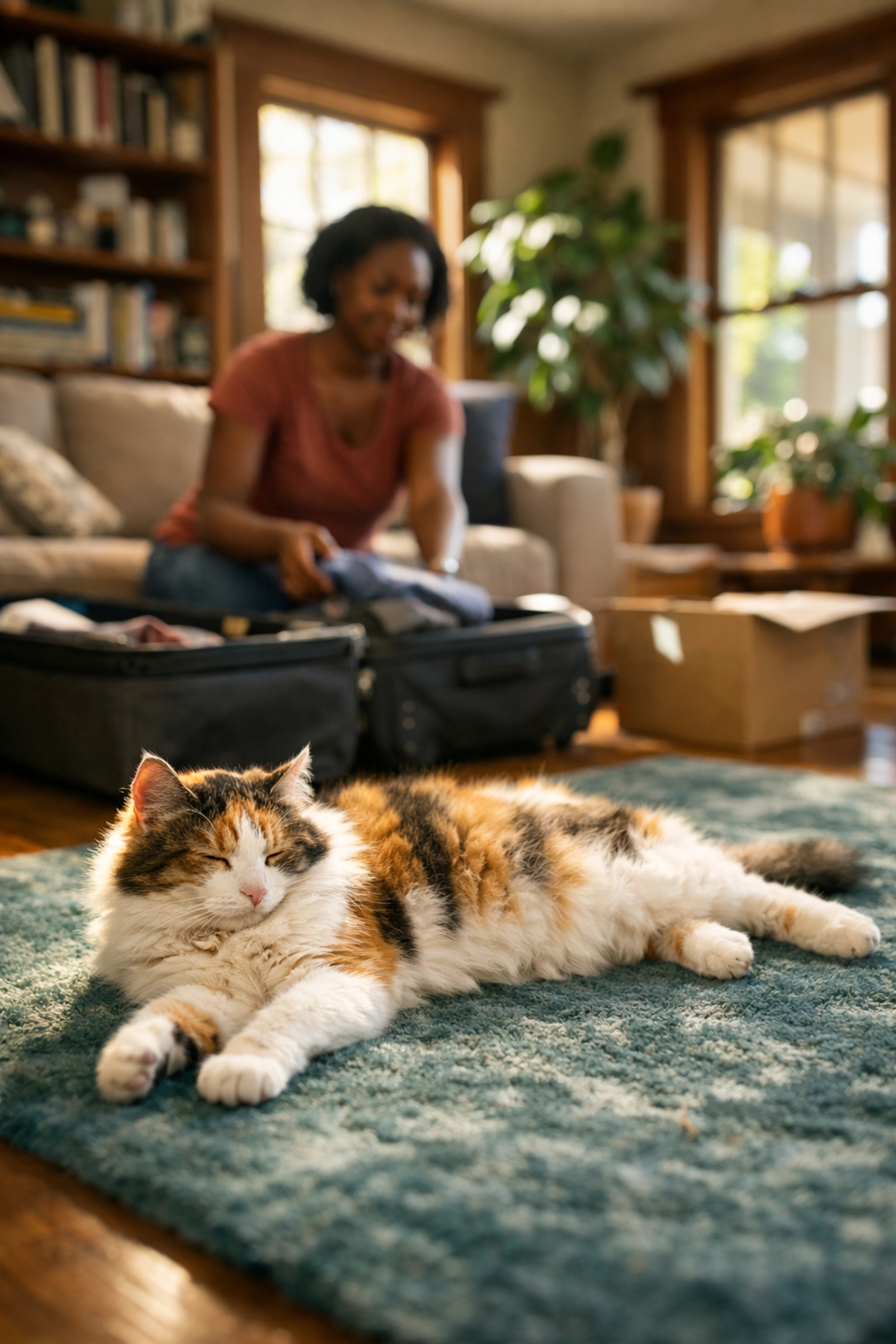
Mission Cats In-Home Care has spent over 15 years refining a service model that addresses the unique logistical challenges of the Bay Area. Whether you are looking for cat sitters in Oakland who understand the nuances of the East Bay or a cat sitter in Palo Alto who can navigate the Peninsula, professional care requires local knowledge.
Since 2009, Mission Cats has served over 8,000 cats, recognizing that a "one size fits all" approach doesn't work (Mission Cats) [1]. A cat in a quiet Walnut Creek cul-de-sac has different environmental stressors than a cat in a bustling San Francisco high-rise. Professional sitters are trained to assess these environments and adjust their interaction styles accordingly.
The Professional Standard: Beyond "Feeding and Scooping"
A common misconception is that cat sitting is a casual hobby. In reality, professional cat care in the Bay Area involves significant training. A high-quality sitter is more than just a food dispenser; they are a trained observer of feline health.
The National Association of Professional Pet Sitters (NAPPS) emphasizes that professional sitters must be able to recognize subtle shifts in behavior that indicate medical distress [8]. For example, a cat who stops grooming or begins hiding more than usual may be experiencing early signs of kidney issues or pain. At Mission Cats, our sitters provide daily updates and photos, ensuring that you are never "out of the loop" regarding your pet's well-being (Mission Cats) [2].
The Crucial "Meet and Greet" Strategy
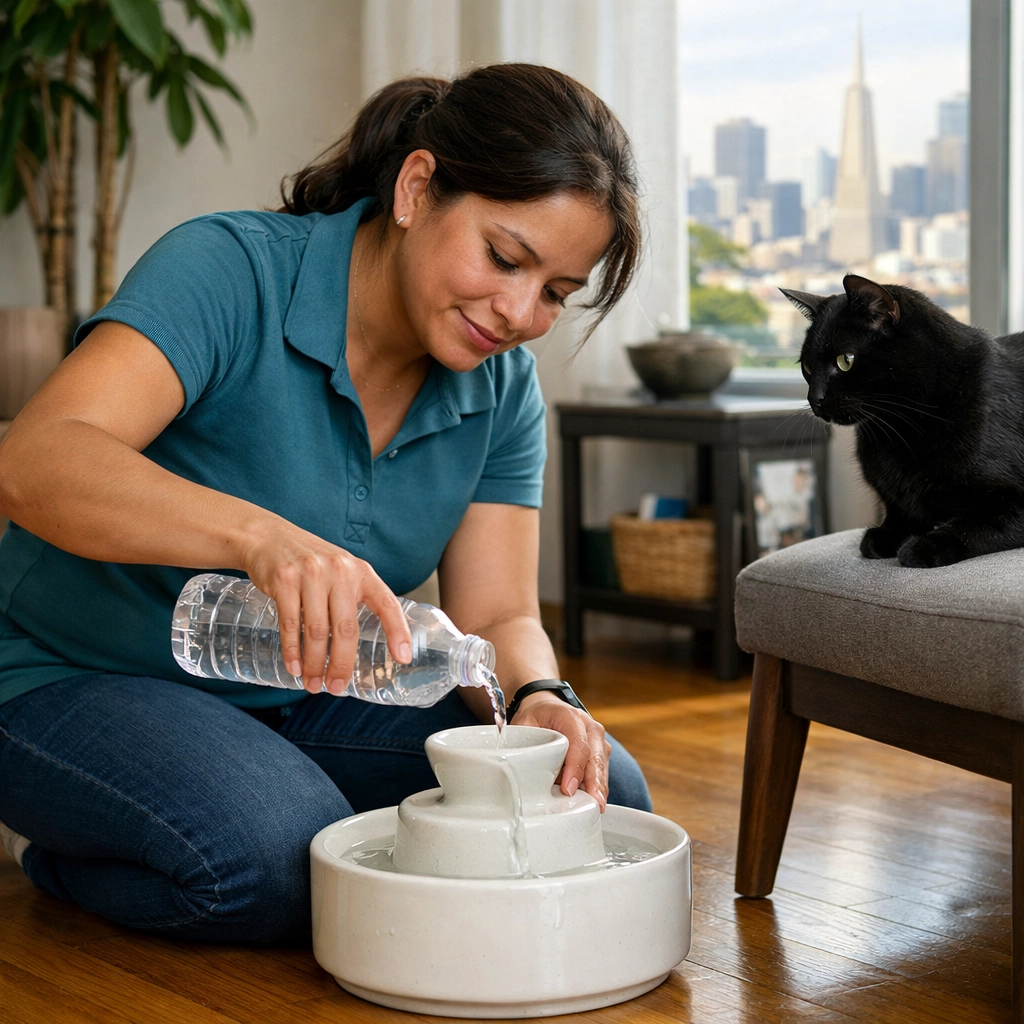
Before any service begins, a professional "Meet and Greet" is mandatory. This isn't just a social call; it’s a clinical intake and a personality assessment.
During this meeting, you should observe how the sitter interacts with your cat. Do they approach slowly? Do they allow the cat to initiate contact? Fear Free Pets experts suggest that "forced affection" is one of the quickest ways to stress a cat [10]. This meeting is also the time to discuss:
- Medical History: Any history of crystals, allergies, or chronic conditions (Mission Cats) [5].
- Hiding Spots: Where does your cat go when they are scared? This is vital information for the sitter to ensure the cat is still in the house and healthy.
- Home Logistics: Alarm codes, trash schedules, and emergency contact info for your vet.
A Timeline of Feline Care Evolution
Understanding the shift toward in-home care requires looking at how our relationship with cats has changed over the decades.
- 1947: Ed Lowe invents "Kitty Litter," allowing cats to move permanently indoors (Smithsonian Magazine) [12].
- 1970s: The rise of commercial boarding kennels, primarily designed for dogs but adapted for cats.
- 1994: Pet Sitters International (PSI) is founded, formalizing the pet-sitting industry [13].
- 2009: Mission Cats begins serving the San Francisco area, focusing exclusively on feline needs [1].
- 2015: The American Association of Feline Practitioners (AAFP) releases "Cat-Friendly" guidelines, emphasizing the reduction of stress in non-clinical environments [9].
- 2020: A surge in "pandemic pets" leads to an increased demand for specialized, high-touch in-home care as owners return to travel.
- 2026: Mission Cats continues to set the standard for professional, tech-integrated cat care across four major Bay Area hubs.
Monitoring Health and Safety While You're Away
When you hire a cat sitter in Walnut Creek or Palo Alto, you aren't just paying for companionship; you are paying for a safety net. Modern professional sitting utilizes technology to provide peace of mind. GPS-tracked check-ins and detailed digital journals ensure that the visit occurred as scheduled and that all tasks, feeding, watering, cleaning, were completed to your standards.
Furthermore, in-home sitters act as a first line of defense for your property. They can bring in mail, rotate lights, and check for leaks or household issues that could become disasters if left for a week (Pet Sitters International) [13].
Case Example: The "Shy Hider" in Palo Alto
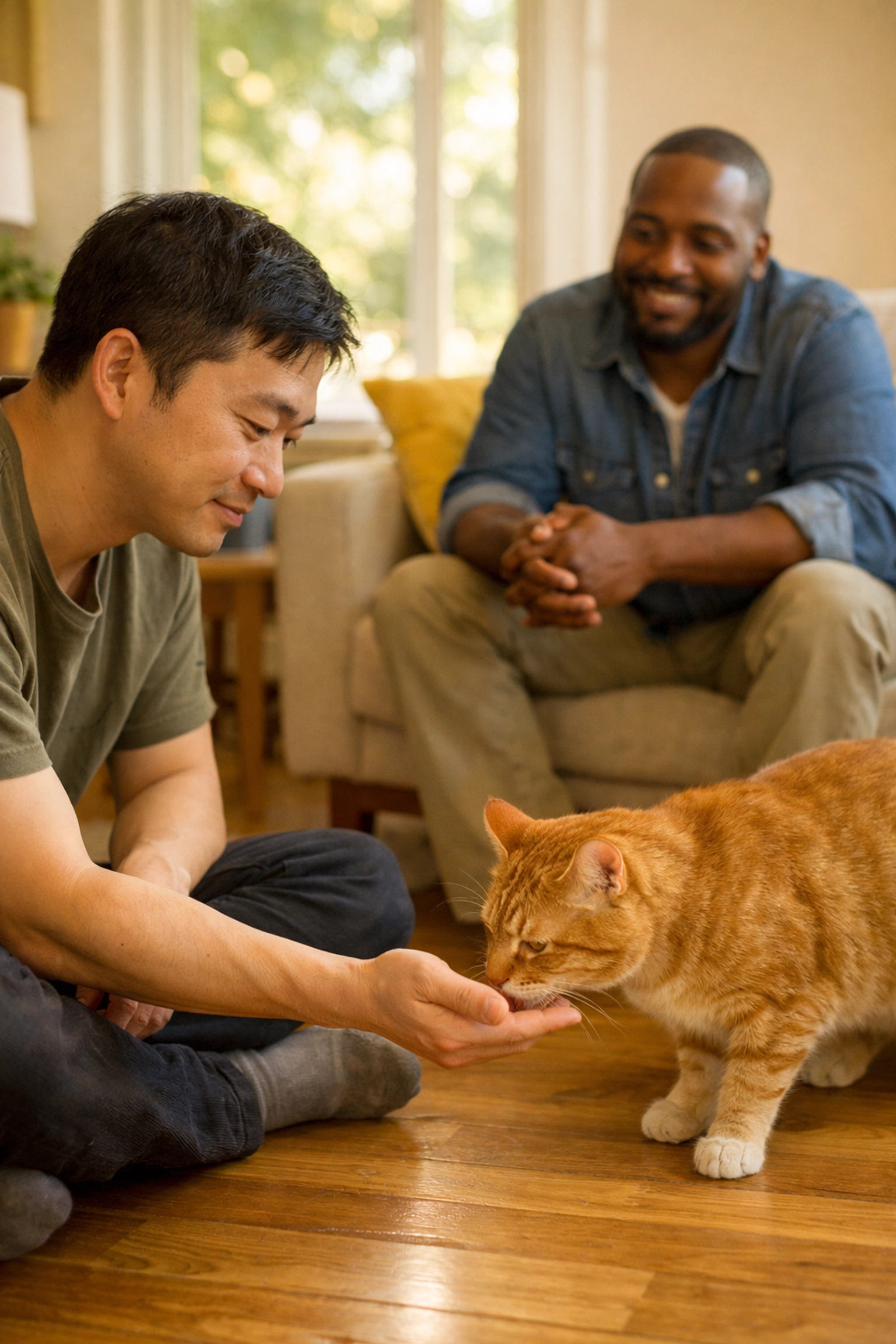
Consider "Mochi," a rescued Siamese mix in Palo Alto. Mochi is notoriously terrified of strangers. Her owners were convinced that no sitter would ever see her. A traditional boarding facility would have been catastrophic for Mochi, likely resulting in "anorexia of stress," where a cat refuses to eat due to fear (VCA Animal Hospitals) [7].
Instead of forcing interaction, her Mission Cats sitter utilized a "passive presence" technique, sitting quietly in the same room while Mochi remained under the bed, reading aloud to get her used to the sitter's voice. By day three, Mochi was emerging to eat while the sitter was still present. By day five, she was engaging in light play. This outcome was only possible because Mochi was in her own home, where she felt safe enough to eventually explore the new human presence.
What Smart Critics Argue
Some critics argue that in-home sitting is unnecessary or less safe than a facility with 24/7 staff.
- "Cats are fine alone for a few days."
Critics often point to the independent nature of cats. However, the American Veterinary Medical Association (AVMA) notes that stagnant water, dirty litter boxes, and the risk of sudden illness (like a urinary blockage) make daily visits a medical necessity [14]. - "Boarding is safer because someone is always there."
While facilities have staff, the "always there" aspect often involves being in a separate room from the cages. In-home sitters provide one-on-one, focused attention that a busy kennel staff simply cannot match (NAPPS) [8]. - "It’s too expensive compared to a neighbor's kid."
While a neighbor might be cheaper, they lack the insurance, bonding, and professional training to handle a medical emergency or a home security issue. The "cost" of a professional is actually an investment in liability protection and specialized feline knowledge (Mission Cats) [5].
Key Takeaways for Stress-Free Care
- Territory is everything: Cats are biologically wired to feel safest in their own environment [9].
- Professionalism matters: Choose sitters who are insured, bonded, and specifically experienced with cats [1].
- Routine is a shield: Keeping feeding and play times consistent reduces cortisol levels [11].
- Daily updates are vital: Professional services provide photos and notes to ensure you stay connected [2].
- Preparation is key: A thorough Meet and Greet prevents 90% of potential sitting issues [10].
- Health monitoring: Experienced sitters can spot "invisible" illnesses before they become emergencies [8].
- Security bonus: In-home sitters help keep your house safe while you are away [13].
- Local focus: Use services that know the specific geography of San Francisco, Oakland, Walnut Creek, and Palo Alto.
Actions You Can Take Today
At Work:
Research your company’s "pet perks." Many modern Bay Area employers offer stipends or discounts for professional pet care services as part of their benefits packages.
At Home:
Audit your cat's environment. Identify their favorite hiding spots and ensure your sitter knows exactly where to look to "lay eyes" on the cat during every visit without causing distress.
In the Community:
Share your positive experiences with professional cat sitting in Oakland or your local neighborhood. Word-of-mouth is how many rescue cat owners find the courage to finally take that much-needed vacation.
In Civic Life:
Support local animal shelters like San Francisco Animal Care & Control. Many professional sitters (including those at Mission Cats) are active donors or volunteers in the local rescue community (Mission Cats) [1].
One Extra Step:
Create a "Cat Care Bible", a one-page laminated sheet with your cat’s microchip number, vet info, and a clear photo. Keep this in a visible spot for your sitter.
FAQ
How many visits does my cat need per day?
Most experts and professional services, including Mission Cats, recommend at least one visit every 24 hours. For kittens, seniors, or cats with medical needs, twice-daily visits are often preferred to ensure health stability (AVMA) [14].
Can sitters administer medication?
Yes, professional cat sitters are usually trained in administering oral medications, transdermal gels, and sometimes even insulin injections. This should always be discussed during the Meet and Greet (Mission Cats) [1].
What happens in an emergency?
A professional sitter will have your vet’s information and a pre-signed medical release form. If an emergency occurs, they will transport your cat to your preferred vet or the nearest 24-hour emergency clinic (NAPPS) [8].
Do you serve all parts of the Bay Area?
Mission Cats specifically focuses on San Francisco, Oakland, Walnut Creek, and Palo Alto, ensuring that our sitters are never spread too thin and can provide reliable, timely care (Mission Cats).
How do I know my cat isn't lonely?
While cats are solitary hunters, they are social creatures. Professional sitters provide "active engagement": playtime and affection: that mimics the social interaction they receive from you, which helps prevent separation anxiety (AAFP) [9].
Mission Cats In-Home Care
Trusted Care for the Cats You Love, Right at Home.
When you travel, your cat deserves more than a quick check-in. Mission Cats In-Home Care provides reliable, loving, professional care in the comfort of your cat’s own home, so you leave with confidence and return to a calm, well-cared-for companion.
Serving San Francisco, Oakland, Walnut Creek, and Palo Alto.
www.missioncats.com
missioncats@missioncats.com
(800) 580-5612 | (415) 376-6082 | (415) 437-2287
Oakland: (510) 315-6446
San Francisco: (415) 528-5471
Palo Alto: (650) 425-3444
Walnut Creek: (925) 376-1300
Professional in-home care for cats whose people want peace of mind, dependable service, and thoughtful attention.
Sources
[1] Mission Cats, “About Us & Our Experience,” Mission Cats, Accessed March 21, 2026, https://www.missioncats.com/about.
[2] Mission Cats, “In-Home Care Services,” Mission Cats, Accessed March 21, 2026, https://www.missioncats.com/in-home-care.
[3] Mission Cats, “Rates and Services,” Mission Cats, Accessed March 21, 2026, https://www.missioncats.com/rates.
[4] Mission Cats, “Reservations,” Mission Cats, Accessed March 21, 2026, https://www.missioncats.com/reservations.
[5] Mission Cats, “Frequently Asked Questions,” Mission Cats, Accessed March 21, 2026, https://www.missioncats.com/contact-us.
[6] Cornell Feline Health Center, “Feline Behavior Problems: Anxiety,” Cornell University College of Veterinary Medicine, Accessed March 21, 2026, https://www.vet.cornell.edu/departments-centers-and-institutes/cornell-feline-health-center.
[7] VCA Animal Hospitals, “Stress in Cats,” VCA, Accessed March 21, 2026, https://vcahospitals.com/know-your-pet/stress-in-cats.
[8] National Association of Professional Pet Sitters (NAPPS), “Benefits of Using a Professional Pet Sitter,” NAPPS, Accessed March 21, 2026, https://petsitters.org.
[9] American Association of Feline Practitioners (AAFP), “Feline Environmental Needs Guidelines,” Journal of Feline Medicine and Surgery, Accessed March 21, 2026, https://catvets.com.
[10] Fear Free Pets, “Helping Your Cat Adjust to a Pet Sitter,” Fear Free, LLC, Accessed March 21, 2026, https://fearfreepets.com.
[11] Ohio State University, “Indoor Pet Initiative: Cats,” OSU College of Veterinary Medicine, Accessed March 21, 2026, https://indoorpet.osu.edu/cats.
[12] Smithsonian Magazine, “The Complicated History of the Cat Litter Box,” Smithsonian Institution, Accessed March 21, 2026, https://www.smithsonianmag.com.
[13] Pet Sitters International (PSI), “Professional Pet Sitting Industry History,” PSI, Accessed March 21, 2026, https://www.petsit.com.
[14] American Veterinary Medical Association (AVMA), “Selecting a Pet Sitter,” AVMA, Accessed March 21, 2026, https://www.avma.org.