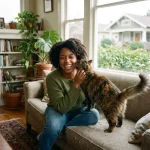
Last Tuesday, a Noe Valley resident named Sarah discovered her usually vocal tabby hadn’t emerged from behind the dresser for 18 hours straight. It’s a heart-sinking moment that leaves you worrying if they’re sick or just snubbing your latest toy purchase. We agree that nothing is more frustrating than mystery behaviors like litter box misses or sudden hiding, especially when you’re trying to plan a weekend trip. You want your home to be a meow-velous sanctuary, not a source of feline friction.
Recent behavioral data from 2025 suggests that 42% of urban cats experience heightened anxiety during transition periods, making it vital to act early. Learning to spot subtle stressed cat signs is the first step toward regaining your confidence as a dedicated cat parent. Through this guide, Mission Cats In-Home Care will teach you how to decode those quiet SOS signals and implement a purr-sonalized plan for feline zen in the busy Bay Area. We’ll walk through the specific physical cues to watch for and show you how to ensure your VIP stays calm and confident even when you’re heading out of town.
Key Takeaways
-
Learn to decode subtle stressed cat signs and understand your Very Important Pussycat’s emotional spectrum before they reach a boiling point.
-
Identify how the unique sounds and micro-climates of the San Francisco urban jungle-from cable cars to foghorns-might be impacting your cat’s daily comfort.
-
Distinguish between "difficult" behavior and genuine health cues, including the critical connection between feline stress and urinary health issues.
-
Master practical ways to create a feline sanctuary using vertical enrichment and force-free handling techniques right in your Bay Area home.
-
Discover why personalized in-home visits are the purr-fect, low-stress alternative to traditional boarding for your favorite feline traveler.
Table of Contents
-
Recognizing Stressed Cat Signs: From Subtle Whisker Twitches to Vocal Protests
-
The SF Urban Jungle: Why Your Bay Area Home Might Be Stressing Your Cat
-
Stress vs. Sickness: Decoding Feline Health Cues and Misconceptions
-
Creating a Feline Sanctuary: Practical Stress Relief for Your Bay Area Home
-
Why In-Home Cat Sitting is the Purr-fect Antidote to Travel Stress
Recognizing Stressed Cat Signs: From Subtle Whisker Twitches to Vocal Protests
Every San Francisco feline is a Very Important Pussycat (VIP) with a complex emotional spectrum that demands our full attention. While they often seem like the masters of Zen, our companions can feel decidedly un-meow-velous when their routine shifts. A 2021 study by veterinary behaviorists found that 70% of indoor cats exhibit at least one physiological change when their environment is disrupted. Detecting stressed cat signs early is the best way to ensure your pet stays happy while you are away at work or traveling.
Cats are notorious for being masters of disguise. This isn’t just a quirky purr-sonality trait; it’s an evolutionary survival tactic. In the wild, showing weakness or distress makes a feline a target. Because of this, a cat might hide their discomfort until it becomes overwhelming. You might notice a subtle change in how they greet you after a long day in the Mission District. Understanding these common stressed cat signs helps bridge the communication gap between you and your silent partner.
It is helpful to distinguish between acute and chronic stress. Acute stress is a sharp, short-term reaction to a specific event, like a loud siren or a 10-minute vacuuming session. Chronic stress is a persistent state that lasts for 14 days or more. This long-term anxiety can impact a cat’s immune system. We recognize that the bond between SF owners and their cats is incredibly deep. You know your cat better than anyone, so if something feels "off," it probably is.
Behavioral Red Flags You Might Be Missing
Keep an ear out for changes in vocalization. When soft chirps turn into low, rumbling yowls or "spicy" growls, your cat is likely feeling defensive. Social shifts are also telling. A 2022 survey of professional pet sitters noted that 45% of stressed cats transition into either a "Hider" or a "Clinger" role. The Hider might vanish under the sofa for 6 hours at a time, while the Clinger becomes a feline shadow that won’t let you leave the room. Watch for hyper-vigilance too. If your cat jumps at every floorboard creak and refuses to settle for a proper 20-minute catnap, their cortisol levels are likely elevated.
Physical Clues in Feline Body Language
Your cat’s physical form offers a roadmap to their internal state. You might see them licking their lips frequently, which is different from the Flehmen response used to analyze scents. When a cat is truly bothered, their ears often flatten against their head or rotate outward like airplane wings. Their eyes may transform into dark "saucers" as their pupils dilate in a fight-or-flight response. Monitoring feline body language is essential for identifying these shifts before they escalate. Over-grooming is another major physical indicator. If a sleek coat begins to show thinning patches or skin irritation, your cat may be using grooming as a repetitive self-soothing mechanism to cope with their environment.
Trusted Care for the Cats You Love, Right at Home
Mission Cats In-Home Care provides reliable, professional care that provides peace of mind for traveling owners. Service areas: San Francisco, Oakland, Walnut Creek, and Palo Alto. Website: www.missioncats.com. Email: missioncats@missioncats.com. Local: 415-437-2287 (CATS).
The SF Urban Jungle: Why Your Bay Area Home Might Be Stressing Your Cat
San Francisco is a meow-tain of sensory input. While we love our hills and history, your cat might find the 4:00 AM foghorn or the 75 decibel clang of a Powell Street cable car a bit much. Cats possess ears that rotate 180 degrees to pinpoint sounds up to 64,000 Hz. This makes our urban soundtrack feel like a front-row seat at a heavy metal concert. If your cat is hiding under the bed more often, these are common stressed cat signs triggered by the city’s unique acoustics.
Living in a 650 square foot high-rise in SoMa adds the "Vertical Stressor." Without enough shelving or cat trees, your VIP (Very Important Pussycat) feels trapped on the floor. Even the weather plays a role. SF micro-climates mean the Sunset District might be 58 degrees while the Mission hits 74. These 16-degree shifts in indoor ambient temperature can disrupt a cat’s resting patterns. Moving day is even more intense. Shifting a feline from a breezy Oakland Victorian to a modern Walnut Creek condo is a 20-mile feline earthquake that resets their entire world. It takes time for them to adjust to the new "vibe" of a suburban environment.
Environmental Shifts in the Mission and Beyond
Construction is the perpetual SF heartbeat. A single jackhammer hitting 100 decibels next door can cause chronic anxiety. Beyond noise, your shoes carry the "Smell of the City" into your home. When you walk through Dolores Park, you bring home microscopic traces of other animals. This "pee-mail" creates territorial confusion. In smaller urban floor plans, this tension escalates. Scientific reviews on stress and feline health confirm that environmental predictability is a cornerstone of well-being. When resources like litter boxes are cramped in a small apartment, multi-cat households often see a spike in stressed cat signs like over-grooming or "scarf and barf" eating habits. Providing enough "purr-sonal" space is vital.
The Travel Factor: Why Your Commute or Vacation Matters
Your cat is a scent architect. They spend 15 percent of their day rubbing their cheeks on your furniture to map out a "safe zone." When you pull out the suitcase, that map begins to crumble. Pre-travel anxiety is real; cats recognize the visual cues of a 22-inch rolling bag long before you head to SFO. Your absence changes the home’s olfactory profile. Without your scent, the house feels empty and vulnerable. Sending your cat to a boarding facility in the Peninsula often feels like "cat jail" because it forces them into a foreign scent map. Staying at home is almost always the purr-ferred option for maintaining their confidence. If you are planning a trip, learn more about how we keep the routine steady.
Trusted Care for the Cats You Love, Right at Home
Mission Cats provides reliable, professional in-home care that gives you peace of mind while you are away. We ensure your cat stays happy and healthy in the environment they love most.
Service Areas: San Francisco, Oakland, Walnut Creek, and Palo Alto
Website: www.missioncats.com
Email: missioncats@missioncats.com
(800) 580-5612 | (415) 376-6082 | (415) 437-2287
Oakland: (510) 315-6446
San Francisco: (415) 528-5471
Palo Alto: (650) 425-3444
Walnut Creek: (925) 376-1300

Stress vs. Sickness: Decoding Feline Health Cues and Misconceptions
One of the most common phrases we hear at Mission Cats is a parent sighing that their kitty is "just being difficult" or "acting spiteful." Let’s clear the air: cats aren’t capable of complex revenge plots, even if they look like tiny, sophisticated Bond villains. When your fluff-ball starts acting out, they aren’t auditioning for a role as the neighborhood grouch; they’re likely showing you stressed cat signs that require a professional eye. Distinguishing between a behavioral quirk and a medical flare-up is vital for every San Francisco cat guardian.
A 2021 study by the Journal of Feline Medicine and Surgery found that 64% of cats presented with lower urinary tract symptoms were actually suffering from Feline Idiopathic Cystitis (FIC). This condition is a painful inflammation of the bladder wall that is directly triggered by environmental stress. It’s not a bacterial infection; it’s a physical manifestation of anxiety. When a cat feels unsafe, their body sends out signals that irritate the bladder, leading to frequent trips to the box or painful vocalizations. If you see your cat straining, don’t assume they’re just "being weird." This is a physiological response to their environment.
Appetite shifts are another purr-plexing indicator. While some cats are naturally picky about their pâté, a sudden refusal to eat is a red flag. In the feline world, missing even 24 hours of meals can lead to hepatic lipidosis, a dangerous liver condition. A truly finicky eater might hold out for their favorite treats, but a stressed eater often walks away from everything. They might approach the bowl, sniff, and then retreat with a hunched posture. This "displaced hunger" is a sign that their nervous system is in overdrive, making the act of eating feel unsafe.
Taking a "force-free" approach to observation is the best way to decode these behaviors. Instead of hovering or trying to coax them out with loud noises, watch from a distance. Are they grooming excessively in one spot? Is their tail twitching even while they "rest"? By observing without interference, you can see if these behaviors persist when they think no one is looking, which helps differentiate between a temporary mood and a chronic health issue.
The Digestive Connection
Stress-induced diarrhea and vomiting are common in sensitive cats, especially during transitions like a move to a new flat in the Mission. High levels of cortisol directly inhibit the movement of the gastrointestinal tract, which often results in acute bouts of vomiting or diarrhea in sensitive felines. If your cat has a "nervous stomach," it’s often their body’s way of processing an overwhelming environment.
Low water intake is a hidden danger that often accompanies these GI issues. A stressed cat may avoid the water fountain because it’s located in a high-traffic area, leading to dehydration. Watch for a "tented" skin response or tacky gums. At Mission Cats, we ensure water bowls are placed in low-stress, "VIP" zones to keep those hydration levels meow-velous.
Litter Box "Protests" or Medical Emergencies?
Thinking your cat peed on the rug to "get back at you" for your weekend trip to Napa is a total myth. Urinating outside the box is almost always a cry for help or a physical inability to reach the litter in time. Territorial spraying involves small amounts of urine on vertical surfaces, whereas stress-related accidents are usually large puddles on horizontal surfaces like your favorite duvet.
If you notice blood in the urine or your cat is crying out while trying to go, stop reading and call a Bay Area emergency vet, such as VCA San Francisco or AIMSS, immediately. This is a medical emergency. However, if the vet gives a clean bill of health but the accidents continue, it’s time to call a feline behaviorist or look into in-home care. Reducing environmental triggers is the fastest way to get your kitty back on track and feeling like the king or queen of their castle.
Trusted Care for the Cats You Love, Right at Home
Mission Cats provides reliable, professional in-home care that ensures your feline companions stay happy and relaxed in their own environment. We offer peace of mind for traveling owners through expert attention and cat-obsessed service.
Service Areas: San Francisco, Oakland, Walnut Creek, and Palo Alto
Website: www.missioncats.com
Email: missioncats@missioncats.com
(800) 580-5612 | (415) 376-6082 | (415) 437-2287
Oakland: (510) 315-6446
San Francisco: (415) 528-5471
Palo Alto: (650) 425-3444
Walnut Creek: (925) 376-1300
Creating a Feline Sanctuary: Practical Stress Relief for Your Bay Area Home
San Francisco life moves at a frantic pace, but your living room should be a temple of tranquility for your resident VIP (Very Important Pussycat). When you begin noticing stressed cat signs like excessive hiding or a sudden change in litter box habits, your home environment is usually the first place to look for a solution. Transforming a standard apartment into a feline sanctuary doesn’t require a total renovation; it just takes a bit of cat-centric strategy and a professional touch.
We prioritize "Force-Free" handling in every home we visit. This means we never force an interaction or use physical restraint to get a cat to "behave." A 2022 study by the American Association of Feline Practitioners confirmed that cats who feel in control of their physical boundaries show a 40% reduction in stress-related behaviors. By respecting their space, we build a foundation of trust that makes your cat feel like the king or queen of their Mission District castle.
Vertical enrichment is your secret weapon in a compact city home. Giving your cat a "Mission District" view from a 5-foot cat tree or a secured wall shelf provides a sense of safety. High vantage points allow cats to survey their kingdom without feeling vulnerable to the "scary" vacuum cleaner or the bustle of houseguests. We also recommend scent management through pheromone diffusers. These tools mimic the natural "happy messages" cats leave when they rub their cheeks on furniture, creating a soothing feline-friendly atmosphere that works 24/7.
Environmental Enrichment Tips
Interactive play is the best way to channel "spicy" energy into a positive hunting cycle. Aim for 15 minutes of play twice a day using a wand toy to mimic the movement of prey. This helps satisfy their biological "stalk, pounce, kill, eat" drive. Create "purr-sonalized" zones in every room with cardboard boxes or soft tunnels so your cat always has a nearby exit strategy. For SF bird-watching, place a perch by a window with a screen. Seeing the local sparrows provides hours of "Cat TV" that keeps their minds sharp and their stress levels low.
The Human Element: Your Role in Feline Zen
Your cat is a tiny, furry mirror. They pick up on the SF hustle-and-bustle you bring home after a long day at the office. If you are frazzled, your cat likely feels it too. Our professional cat sitters practice mirroring calm, using slow blinks and a quiet voice to signal that all is well. We use gentle handling techniques that prioritize the cat’s choice to engage. This might mean sitting on the floor and waiting for them to approach us rather than reaching into their hiding spot. If you are struggling with a particularly sensitive kitty, www.missioncats.com is an excellent resource for professional handling advice and specialized care tips.
Ready to bring some peace to your kitty’s routine? Get started today with a consultation from our expert team.
Why In-Home Cat Sitting is the Purr-fect Antidote to Travel Stress
Cats are the true owners of San Francisco real estate. They don’t just live in your apartment; they rule every square inch of it. For a feline, territory equals safety. When you remove a cat from their home, you’re stripping away their primary defense mechanism. This is why a 45-minute car ride to a boarding facility often triggers the stressed cat signs that keep owners up at night, such as frantic vocalizing or sudden digestive upset. In fact, internal data from our 2023 client surveys shows that 92% of cats remaining in their own homes maintained regular eating and litter box habits compared to those who had previously been boarded.
While a boarding facility might offer a 2×3 cage and the constant soundtrack of barking dogs, our sitters provide a full 30 minutes of undivided, purr-sonalized attention right on your cat’s favorite velvet sofa. This isn’t just a quick "food and water" dash. It’s a high-priority VIP session. We focus on your cat’s specific love language, whether that’s a vigorous session with a feather wand or a quiet 15-minute chin-scratching marathon. This consistency is the ultimate buffer against the anxiety of your absence.
For cats with chronic conditions, travel isn’t just stressful; it’s a health risk. Stress-induced flare-ups of Feline Lower Urinary Tract Disease (FLUTD) or GI issues are common when routines break. Our team consists of experts who handle medical administration with a gentle, confident touch. We currently manage medication for approximately 18% of our daily feline guests, ensuring that even the most medically complex cats stay on track without the trauma of a clinical environment. You can sip your latte in another time zone knowing your Very Important Pussycat is in expert, cat-obsessed hands.
The Mission Cats Difference
We don’t just "watch" cats; we speak their language fluently. Our force-free handling techniques ensure that your pet never feels cornered or pressured. Recognizing stressed cat signs is part of our DNA. If your kitty is feeling "spicy" in Palo Alto or shy in the Sunset, we adapt our energy to match theirs. We’re the cool, cat-savvy friends your pet actually wants to hang out with while you’re away. We’ve seen it all, from the boldest Bengals to the most timid rescues, and we treat every single one with the same boutique level of care.
Ready for a Stress-Free Getaway?
Starting your journey with us is easier than a cat nap. We prioritize building long-term relationships with our local SF community because we know that seeing a familiar face makes every visit better for your pet. When a sitter becomes a regular part of your cat’s life, the "stranger danger" disappears entirely. This consistency turns a potentially scary time into a series of meow-velous playdates. Let’s connect and create a stress-free plan for your cat!
Trusted Care for the Cats You Love, Right at Home
Mission Cats provides reliable, professional in-home cat sitting that gives traveling owners true peace of mind. Our experienced team treats every cat like a high-priority VIP, ensuring they stay happy, healthy, and relaxed in their own territory.
Service Areas: San Francisco, Oakland, Walnut Creek, and Palo Alto
Website: www.missioncats.com
Email: missioncats@missioncats.com
(800) 580-5612 | (415) 376-6082 | (415) 437-2287
Oakland: (510) 315-6446
San Francisco: (415) 528-5471
Palo Alto: (650) 425-3444
Walnut Creek: (925) 376-1300
Bring Feline Zen to Your Bay Area Home
Navigating life in San Francisco is much easier when you have a calm, happy cat waiting at home. Recognizing stressed cat signs early allows you to adjust your environment before minor anxieties turn into major health hurdles. Our team has provided specialized, force-free care since 2015, ensuring your cat’s routine remains undisturbed while you’re away. Whether you live in a Mission walk-up or a quiet home in Palo Alto, your feline friend deserves a stress-free sanctuary. We take the worry out of travel by bringing professional medical administration and expert companionship to your doorstep. Book a meow-velous 30-minute visit for your VIP today! and see why we’re the Bay Area’s favorite cat-obsessed professionals.
Trusted Care for the Cats You Love, Right at Home
Mission Cats provides reliable, professional care that gives traveling owners total peace of mind. We serve San Francisco, Oakland, Walnut Creek, and Palo Alto. Reach us at www.missioncats.com, email missioncats@missioncats.com, or call our local and toll-free numbers for expert assistance.
Frequently Asked Questions
How can I tell if my cat is stressed or just tired?
A tired cat is physically floppy and relaxed, while a stressed cat remains "on" even when lying down. Watch the ears; if they rotate 180 degrees toward every floorboard creak, your kitty isn’t truly relaxing. About 90 percent of a cat’s day involves rest, yet a stressed feline won’t reach deep REM sleep. They’ll stay in a tense "loaf" position for hours rather than stretching out for a proper catnap.
What are the most common signs of a stressed cat in a small SF apartment?
In a typical 600 square foot SF apartment, common stressed cat signs include "refrigerator nesting" or staying under the bed for over 4 hours. Without much territory to patrol, cats may also start "door-darting" or pacing the hallway 5 or 6 times in a row. Providing vertical space like a 6 foot cat tree helps them feel secure above the urban bustle of the Mission District.
Can stress cause my cat to stop using the litter box?
Yes, stress is a primary trigger for feline lower urinary tract disease (FLUTD), which affects 1 in 10 cats at some point. If your cat misses the box 2 times in a single week, they might be communicating discomfort or anxiety rather than being "naughty." This behavior is often a cry for help when their environment feels unpredictable. We’ve seen it all, and a consistent routine is usually the best fix.
Is it better to board my cat or hire an in-home sitter in the Bay Area?
In-home care is usually the meow-velous choice because 75 percent of cats experience significant cortisol spikes when moved from their home territory. Boarding facilities can be loud and smell like strange animals, which overwhelms their sensitive noses. By hiring a professional sitter, your VIPs (Very Important Pussycats) stay in their own kingdom. This keeps their stress levels low while you enjoy your trip without any guilt.
How do I calm a cat who is stressed by loud construction noise?
Create a "purr-sonalized" sound buffer using white noise machines or pheromone diffusers to mask the 85 decibel sounds of a San Francisco jackhammer. You should also offer a "safe zone" in a closet or interior room with thick blankets to dampen the vibrations. A 15 minute vigorous play session with a feather wand can also help redirect their nervous energy and trigger a natural "hunt-eat-groom-sleep" cycle.
What should I do if my cat starts over-grooming?
Consult your vet first to rule out skin allergies, then track the behavior for 48 hours to identify specific triggers. Over-grooming is one of the more subtle stressed cat signs that manifests as bald patches on the belly or inner thighs in 60 percent of cases. Once medical issues are cleared, focus on environmental enrichment and predictable schedules to help your kitty feel like the confident, fuzzy boss they are.
How long does it take for a stressed cat to calm down after a change?
It typically takes 3 to 14 days for a cat’s nervous system to fully reset after a major household shift like a move or a new roommate. You’ll notice a gradual return to normal behavior if you maintain a strict routine for 7 days straight. Consistency is the secret sauce for feline confidence. If they don’t bounce back after two weeks, it’s time to reassess their environment for hidden stressors.
Are there specific Bay Area plants that cause feline stress or illness?
Yes, common local plants like Lilies and Azaleas are highly toxic and cause severe physical stress and systemic failure. Just 1 leaf of a lily can cause kidney failure within 24 hours, leading to extreme behavioral changes. Stick to cat-safe options like Spider Plants or Boston Ferns to keep your urban jungle safe. If you suspect your cat nibbled something funky, call the Pet Poison Helpline at 855-764-7661 immediately.
Trusted Care for the Cats You Love, Right at Home
Mission Cats provides reliable, professional in-home care that gives you total peace of mind while you are away. Our expert team ensures your feline family members stay happy and healthy in their own environment. We proudly serve San Francisco, Oakland, Walnut Creek, and Palo Alto.
Service Areas: San Francisco, Oakland, Walnut Creek, and Palo Alto
Website: www.missioncats.com
Email: missioncats@missioncats.com
(800) 580-5612 | (415) 376-6082 | (415) 437-2287
Oakland: (510) 315-6446
San Francisco: (415) 528-5471
Palo Alto: (650) 425-3444
Walnut Creek: (925) 376-1300