
Your Guide to Stress-Free Urban Cat Care from the Mission Cats Team
This post answers the most common feline health and behavior questions for Bay Area residents trying to provide the best possible life for their cats.
Last month, a client in Noe Valley called us, sounding completely defeated. Her cat, Barnaby, had started treating the laundry basket like a litter box. She’d tried every spray and "miracle" cleaner on the market, but the behavior continued. She was worried it was spite. Honestly, cats don't really do spite, they do communication. After a quick look at her setup, we realized Barnaby was just frustrated with a covered box tucked in a cramped closet. By moving the box to a ventilated area and switching to a shallow, open-top model, the "protest" stopped overnight.
It’s these small, often overlooked details that define the quality of life for our indoor companions. Living in the Bay Area presents unique challenges, from small apartments in San Francisco to the busier suburban layouts of Palo Alto. Over the last 20 days, the Mission Cats In-Home Care staff has researched and shared a series of daily tips to help local owners navigate everything from "whisker fatigue" to the nuances of finding reliable cat sitters in Oakland.
In this recap, you will learn:
- The high-level science behind perfect litter box maintenance.
- How to optimize your home environment for enrichment in small spaces.
- The essential steps for preparing your cat (and your home) for professional cat sitting in San Francisco.
The Evolution of Feline Guardianship
Cat care has shifted dramatically over the last century. Historically, cats were viewed primarily as pest control, often living semi-outdoor lives with minimal intervention. However, as urbanization increased and our understanding of feline health deepened, the "indoor-only" lifestyle became the gold standard for safety and longevity. According to the Smithsonian Institution, the shift toward cats as primary indoor companions accelerated in the mid-20th century with the invention of commercial cat litter in 1947 [9].
Today, the Bay Area is home to some of the most dedicated cat parents in the country. Data from the American Veterinary Medical Association (AVMA) suggests that cat owners are increasingly seeking specialized services, moving away from "all-in-one" boarding facilities toward personalized, in-home care [4]. This evolution reflects a growing realization: cats are territorial animals that thrive on routine and familiar scents. Whether you are looking for a cat sitter in Walnut Creek or a specialist in Palo Alto, the goal is now focused on "Fear Free" environments that prioritize the cat’s emotional well-being [12].
1. Master the Litter Box Math
The most common mistake we see is the "one and done" approach to litter boxes. The Golden Rule is simple: $N + 1$, where $N$ is the number of cats you have. If you have one cat, you need two boxes. If you have two cats, you need three. These boxes should be placed in different locations, not lined up in a row, because cats view a cluster of boxes as a single bathroom [2].
In San Francisco apartments, space is a premium, but tucking a box into a tiny, unventilated closet is a recipe for avoidance. Experts at Lenity Veterinary Specialists emphasize that you should scoop daily, twice if possible, and do a full clean weekly [1]. Cats have a sense of smell 14 times stronger than humans; if you can smell the box, it’s already unbearable for them.
2. Combat Whisker Fatigue
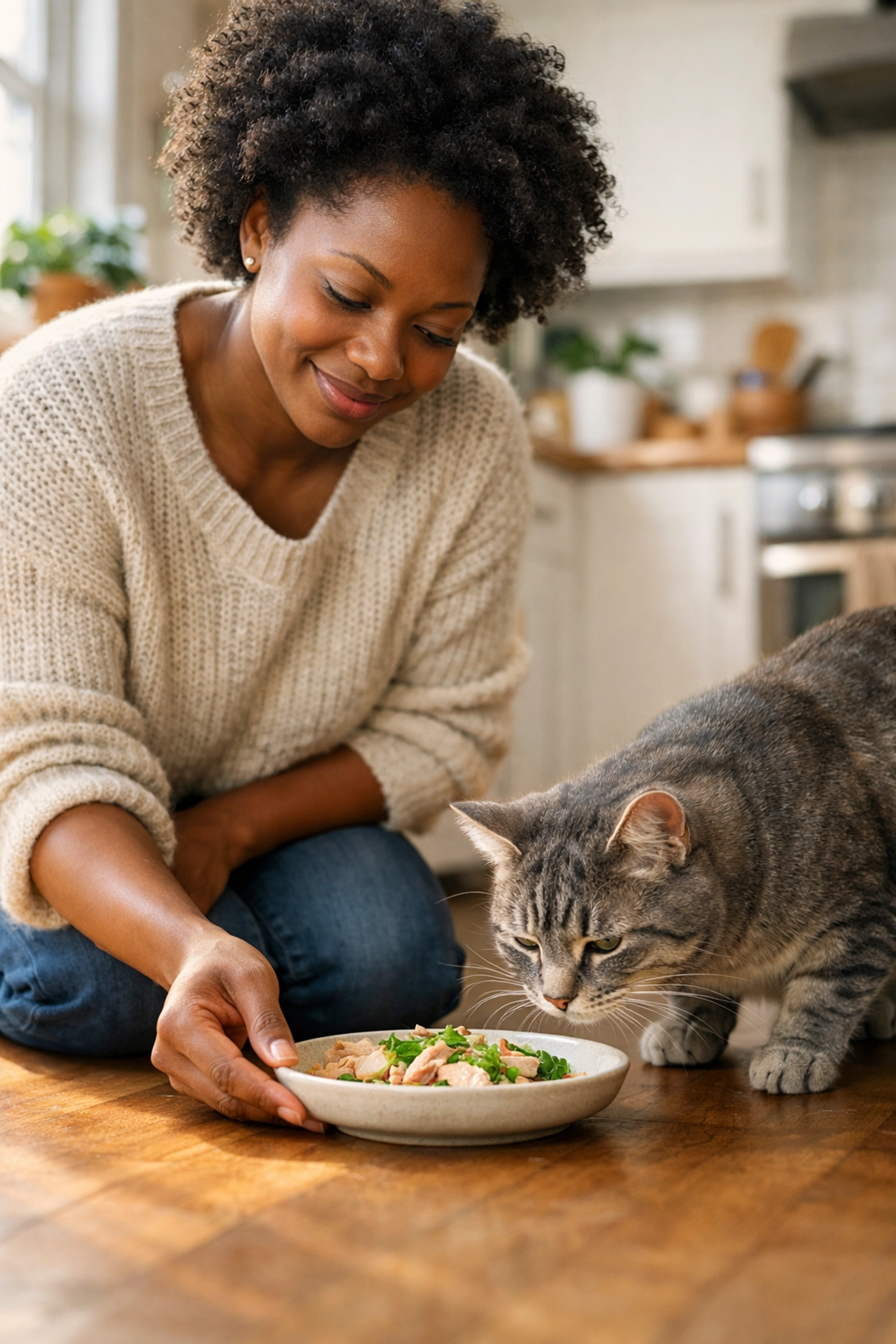
Have you noticed your cat scooping food out of their bowl with their paw? Or maybe they leave the kibble at the edges of the dish? This is often "whisker fatigue." A cat's whiskers are highly sensitive tactile organs. When they repeatedly hit the sides of a deep, narrow bowl, it causes sensory overload [2].
Switch to wide, shallow saucers or ceramic plates. Stainless steel is also a great option because it doesn't harbor bacteria like plastic does. While you're at it, move the water bowl away from the food. In the wild, cats avoid water near their prey to prevent contamination, and many indoor cats will drink significantly more if their water is in a separate room [2].
3. Vertical Territory in Small Spaces
San Francisco is known for its "compact" living. If you don't have much floor space, you have to look up. Cats are three-dimensional animals. Providing vertical territory, like cat trees, wall shelves, or even cleared-off tops of bookshelves, increases their living space without increasing your rent.
The Ohio State University’s Indoor Pet Initiative highlights that vertical space is especially important in multi-cat households, as it allows higher-ranking cats to observe their territory and lower-ranking cats to find safety [8]. For those searching for cat sitting in San Francisco, a home with vertical enrichment is much easier for a sitter to manage, as the cats are generally more confident and less stressed.
4. The Carrier is Not the Enemy
Most cats only see their carrier when they’re heading to the vet, which creates a massive "negative association." To fix this, leave the carrier out in the living room year-round. Put a comfy blanket and some silvervine or catnip inside.
The American Association of Feline Practitioners (AAFP) recommends making the carrier a "permanent piece of furniture" [6]. Feed your cat treats inside it. Eventually, it becomes a safe sleeping pod rather than a "scary box of doom." This makes your life easier, and it makes the job of your cat sitter in Palo Alto much safer in case of an emergency evacuation.
5. Hydration is Health
Cats have a low thirst drive because their ancestors got most of their moisture from prey. Chronic dehydration can lead to kidney issues and urinary crystals. To encourage drinking, consider a circulating water fountain. The sound and movement of running water are more appealing to cats than standing water [2].
Additionally, incorporate wet food into their diet. Even a small amount of high-quality canned food provides essential moisture that kibble lacks. For owners working with cat sitters in Oakland, we always recommend leaving clear instructions on how to refresh fountains, as stagnant water can quickly grow slime.
6. The Professional Care Timeline
Knowing when to book care is as important as the care itself. If you're traveling for the holidays, "last minute" in the Bay Area usually means you're out of luck.
| Milestone | Action Item | Source |
|---|---|---|
| 4 Weeks Prior | Contact Mission Cats to check availability | [1] |
| 3 Weeks Prior | Confirm all vaccinations are up to date | [4] |
| 2 Weeks Prior | Schedule a "Meet and Greet" for new sitters | [1] |
| 1 Week Prior | Refill all prescriptions and food supplies | [7] |
| 3 Days Prior | Update your "Cat Care Instruction" document | [1] |
| 2 Days Prior | Test your spare keys or smart lock codes | [1] |
| 1 Day Prior | Leave out the carrier and extra cleaning supplies | [6] |
| Departure Day | Confirm the sitter has successfully entered the home | [1] |
7. Enrichment Beyond the Red Dot
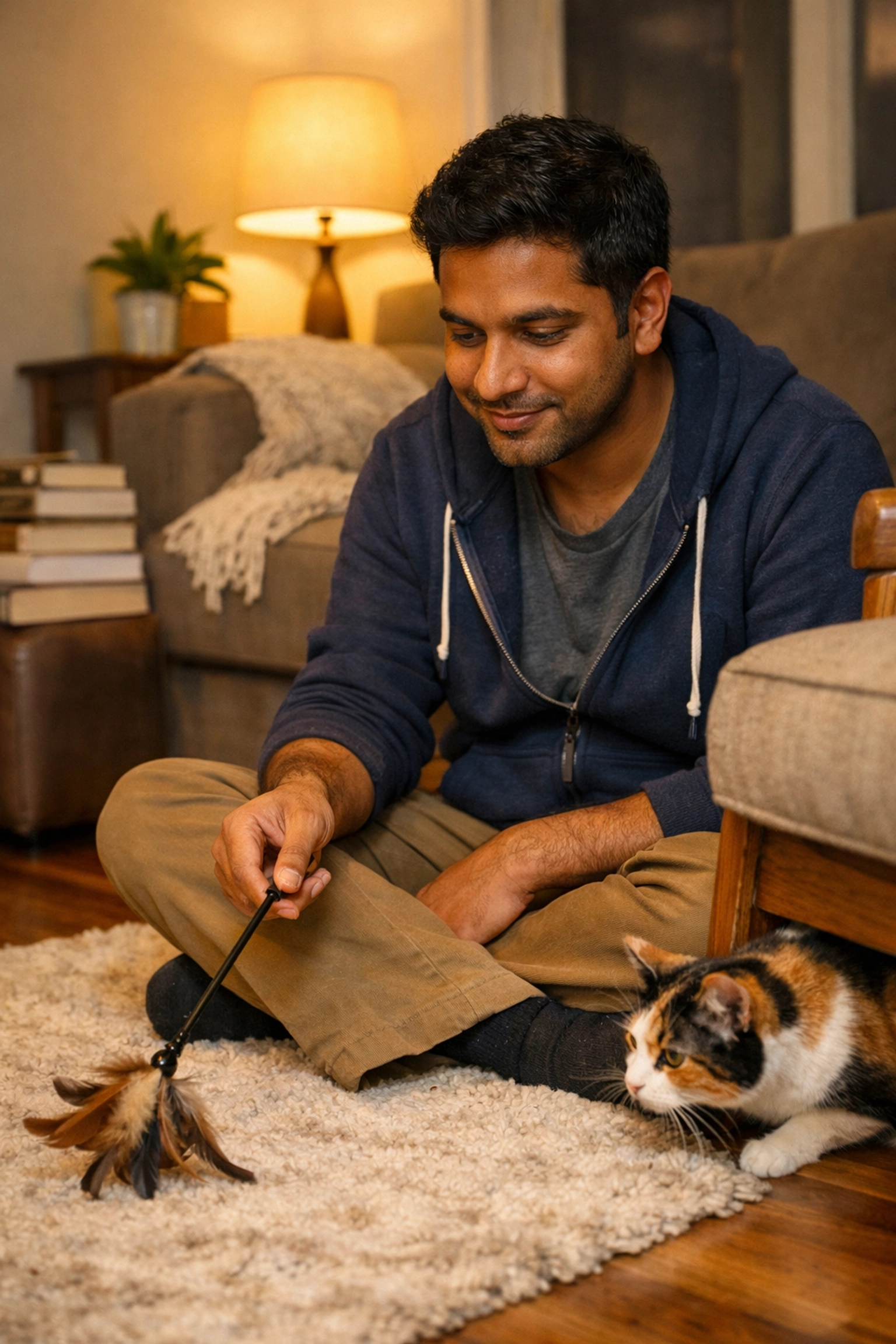
Laser pointers are fun, but they can be frustrating for cats because there is no "physical catch" at the end of the hunt. This can lead to obsessive behaviors. Always end a laser session by landing the dot on a physical toy they can grab, then immediately give them a treat to complete the "Hunt-Catch-Kill-Eat" cycle [12].
Wand toys are generally better for building a bond. If you use a cat sitter in Walnut Creek, let them know which toys are your cat’s favorite. Interactive play for 15 minutes a day can significantly reduce behavioral issues like nighttime "zoomies" or destructive scratching.
8. Understanding the "Slow Blink"
Communication with your cat doesn't have to be a mystery. The "slow blink" is essentially a feline "I love you" or "I trust you." By narrowing your eyes and slowly closing them while looking at your cat, you are signaling that you aren't a threat.
A study published in Scientific Reports confirmed that cats are more likely to approach humans who use the slow-blink technique [10]. We teach all our staff this trick because it’s the fastest way to win over a shy cat during a sitting visit.
9. Senior Cat Accommodations
As cats age, their needs change quietly. A cat that used to jump onto the counter might now have arthritis. Look for subtle signs: matted fur on their back (they can't reach it to groom) or hesitating before jumping.
Provide "pet stairs" to their favorite spots and consider low-entry litter boxes. The Cornell Feline Health Center notes that senior cats are also more prone to hyperthyroidism and kidney disease, making consistent monitoring of their water intake and weight vital [7].
10. The Stakes of Professional Care: A Case Study
In 2024, an Oakland resident decided to save money by having a neighbor "pop in" once every three days for her two cats. On the second day, a minor earthquake caused a heavy bookshelf to tip, pinning one of the cats by its tail. Because no one was scheduled to visit for another 48 hours, the cat suffered significant trauma and dehydration.
When we handle cat sitting in San Francisco or the East Bay, we insist on at least one visit every 24 hours. Why? Because cats hide pain. A cat can develop a life-threatening urinary blockage in less than a day. Our sitters are trained to look for "the absence of normal", is there less pee in the box? Is the cat hiding in a new spot? Those 30-60 minutes of professional eyes on your pet aren't just about food; they are about safety and early intervention.
What Smart Critics Argue
Some skeptics argue that professional in-home care is an "unnecessary luxury" compared to traditional boarding or relying on friends.
- Critic Argument 1: "Cats are solitary and don't care if I'm gone."
- Response: While cats are more independent than dogs, they are highly attached to their territory. Removing them from their home to a boarding facility causes a spike in cortisol (stress hormone), which can suppress their immune system [5].
- Critic Argument 2: "A neighbor is cheaper and does the same thing."
- Response: Professional sitters carry liability insurance and bonding. If a neighbor loses your key or forgets to visit, you have little recourse. Mission Cats provides GPS-tracked check-ins and detailed photo reports, ensuring accountability [1].
- Critic Argument 3: "Cameras are enough to monitor my cat."
- Response: Cameras can't smell a gas leak, feel if a cat has a fever, or scoop a litter box. They are a great supplement, but they are not a replacement for human interaction.
Key Takeaways
- The N+1 Rule: Always have one more litter box than the number of cats you own [2].
- Proactive Hydration: Use fountains and wet food to prevent kidney issues [7].
- Territory Matters: Vertical space is the best way to expand a small SF apartment for a cat [8].
- Daily Visits: Never go more than 24 hours without a human checking on your cat [1].
- Bowl Design: Wide, shallow bowls prevent whisker fatigue and encourage eating [2].
- Carrier Comfort: Keep the carrier out as a regular bed to reduce vet-trip anxiety [6].
- Professional Accountability: Ensure your sitter is insured and provides verifiable visit reports.
Actions You Can Take Today
At Work:
Research local cat sitters in Oakland or your specific neighborhood before you actually need one. Most reputable companies require an initial meet-and-greet that can't be done the day before a holiday.
At Home:
Perform a "whisker check." If your cat’s food bowl is deep and narrow, swap it for a ceramic salad plate tonight and see if their eating habits improve.
In the Community:
Support local shelters like the SF SPCA. They provide invaluable resources for low-cost spay/neuter and behavior consultations that keep cats in their homes [5].
In Civic Life:
Ensure your cat is microchipped and that the contact information is current. In a city like San Francisco, an indoor cat that slips out the door can easily be displaced by hills or fog.
One Extra Step:
Create a "Cat Emergency Binder." Include a copy of their medical records, your vet's contact info, a recent photo, and a signed "Authorization for Treatment" form. Leave this in a visible spot (like the fridge) for your sitter.
FAQ
How do I know if my cat likes the sitter?
Look for "positive engagement" in the photos your sitter sends. A cat that is playing, eating, or even just lounging in the same room as the sitter is showing signs of comfort. If the cat is constantly hiding in the back of a closet in every photo, it might be time to discuss a different approach with your sitter.
Is it okay to leave my cat alone for a weekend?
We strongly advise against it. A lot can happen in 48 hours, power outages that disable fountains, sudden illnesses, or accidental trapping in a room. A daily visit ensures your cat is safe and your home is secure.
Why does my cat only drink from the sink?
Many cats prefer moving water because, instinctively, still water in nature is more likely to be contaminated. A fountain is a great way to satisfy this instinct without leaving your faucet dripping.
What is the best litter for SF apartments?
Clumping unscented litter is usually best. Scented litters use heavy perfumes that can be off-putting to cats. High-quality clumping litter makes daily scooping easier and keeps odors down in small spaces [1].
How much does professional cat sitting cost?
Rates vary based on the length of the visit and the number of cats. In the Bay Area, you can generally expect to pay between $30 and $60 per visit for professional, insured care [1].
Mission Cats In-Home Care
Trusted Care for the Cats You Love, Right at Home.
When you travel, your cat deserves more than a quick check-in. Mission Cats In-Home Care provides reliable, loving, professional care in the comfort of your cat’s own home, so you leave with confidence and return to a calm, well-cared-for companion.
Serving San Francisco, Oakland, Walnut Creek, and Palo Alto.
www.missioncats.com
missioncats@missioncats.com
(800) 580-5612 | (415) 376-6082 | (415) 437-2287
Oakland: (510) 315-6446
San Francisco: (415) 528-5471
Palo Alto: (650) 425-3444
Walnut Creek: (925) 376-1300
Professional in-home care for cats whose people want peace of mind, dependable service, and thoughtful attention.
Sources
[1] Mission Cats In-Home Care, “Services and Rates,” April 2026, https://www.missioncats.com/rates, Accessed April 22, 2026.
[2] Cats.com, “25 Tips For First-time Cat Owners,” 2024, https://cats.com, Accessed April 22, 2026.
[3] Lenity Veterinary Specialists, “Litter Box Care: Tips from a San Mateo Vet,” 2023, https://lenityvet.com, Accessed April 22, 2026.
[4] American Veterinary Medical Association (AVMA), “Pet Ownership and Demographics Sourcebook,” 2022, https://www.avma.org, Accessed April 22, 2026.
[5] San Francisco SPCA, “Cat Behavior Resources,” 2024, https://www.sfspca.org, Accessed April 22, 2026.
[6] American Association of Feline Practitioners (AAFP), “Cat Friendly Home Environment,” 2023, https://catvets.com, Accessed April 22, 2026.
[7] Cornell Feline Health Center, “Health Information: Senior Cats,” 2024, https://www.vet.cornell.edu/feline-health-center, Accessed April 22, 2026.
[8] The Ohio State University, “Indoor Pet Initiative: Feline Life Stressors,” 2023, https://indoorpet.osu.edu, Accessed April 22, 2026.
[9] Smithsonian Magazine, “A Brief History of House Cats,” 2021, https://www.smithsonianmag.com, Accessed April 22, 2026.
[10] Humphrey, T., et al., “The role of cat eye narrowing movements in cat–human communication,” Scientific Reports, 2020, https://www.nature.com/articles/s41598-020-73426-0, Accessed April 22, 2026.
[11] ASPCA, “General Cat Care,” 2024, https://www.aspca.org, Accessed April 22, 2026.
[12] Fear Free Happy Homes, “Indoor Enrichment for Cats,” 2024, https://www.fearfreehappyhomes.com, Accessed April 22, 2026.
Disclaimer: This content is for general informational and educational purposes only and does not constitute veterinary, medical, legal, or other professional advice. Reading this content does not create a client or professional relationship with Mission Cats In-Home Care. Because every cat and household is different, please consult a licensed veterinarian or other qualified professional for advice specific to your situation. Mission Cats In-Home Care makes no warranties regarding the accuracy or completeness of this information and is not responsible for third-party content, links, products, or services. Testimonials and examples are illustrative only and do not guarantee similar results.


