
Professional Cat Care: Beyond the Food Bowl
It was a fog-heavy Friday in Pacific Heights when Sarah headed to the airport for a long-overdue weekend in Tahoe. She filled a massive gravity feeder with kibble, topped off two water bowls, and cleaned the litter box. "Oliver will be fine," she told herself, glancing at her ginger tabby. "He sleeps twenty hours a day anyway." When she returned Sunday night, she found Oliver had knocked over a heavy floor lamp in a frantic midnight zoomie session, shredding the curtains and, more alarmingly, had stopped eating due to stress-induced nausea. Sarah realized then that "fine" is a low bar for a family member.
This scenario is common across the Bay Area. Many pet parents in San Francisco, Oakland, Walnut Creek, and Palo Alto believe cats are the "low-maintenance" alternative to dogs. While cats don't need a midday walk around Lake Merritt or a trip to a dog park in Palo Alto, they are sensitive creatures of habit that require consistent social interaction and environmental stability. Leaving a cat alone for forty-eight hours isn't just a risk to your upholstery; it’s a risk to their physical and mental health.
In this guide, you will learn:
- Why the "solitary hunter" myth leads to dangerous neglect.
- The essential environmental prep every San Francisco home needs before a sitter arrives.
- How to distinguish between a casual hobbyist and a professional cat sitter.
The Evolution of Feline Guardianship in the Bay Area
The way we care for cats has shifted dramatically over the last century. Historically, cats were viewed as semi-independent pest control (Cornell Feline Health Center) [1]. However, as feline medicine advanced and our understanding of feline behavioral health deepened, the "indoor-only" lifestyle became the gold standard for safety and longevity. This shift created a new challenge: how to provide stimulation and monitoring when the human family is away.
Data from the American Pet Products Association indicates that pet spending in the U.S. reached nearly $147 billion in 2023, with a significant portion allocated to specialized pet sitting services (APPA) [2]. In high-density urban environments like San Francisco, the demand for "in-home" care has outpaced traditional boarding. This is largely because cats are territorial animals; moving them to a boarding facility triggers a stress response that can suppress their immune system (International Cat Care) [3]. Professional cat sitting in San Francisco and the surrounding suburbs is no longer a luxury, it is a health-focused necessity for modern pet owners.
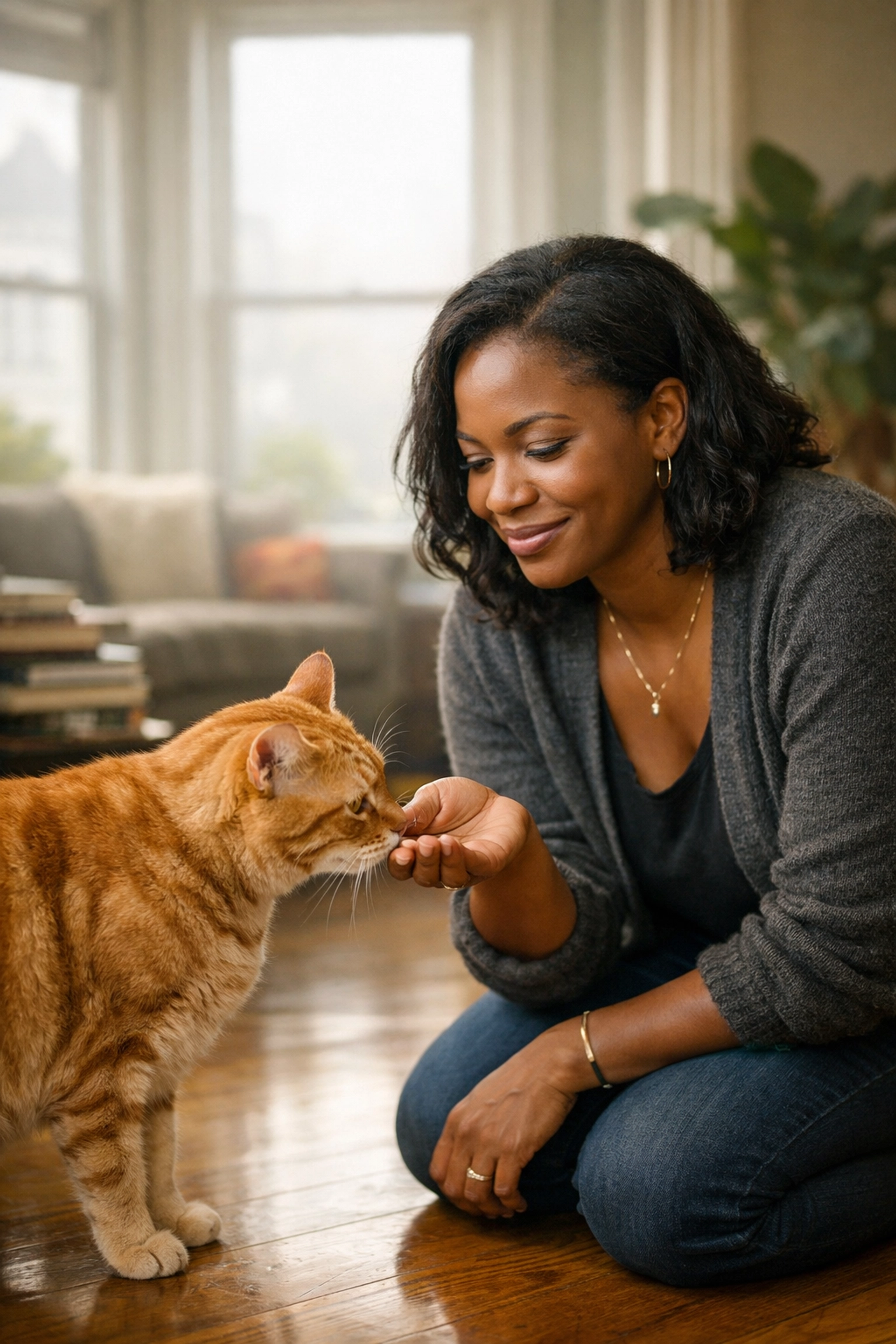
1. Leaving Your Cat Alone for More Than 24 Hours
The most frequent mistake is assuming a cat can "self-manage" for a weekend. Feline physiology is unique; if a stressed cat stops eating, they can develop hepatic lipidosis, a potentially fatal liver condition, in as little as 24 to 48 hours (Cornell Feline Health Center) [1]. Without a daily check-in, a medical emergency like a urinary blockage (common in male cats) can go unnoticed until it is too late.
In the Bay Area, where commutes from Walnut Creek to the city are long, it’s tempting to skip a day. However, professional standards dictate that a cat should be visited at least once every 24 hours (Pet Sitters International) [4]. This ensures the cat is eating, hydrated, and hasn't encountered a household hazard. For senior cats or those with medical needs in Palo Alto or Oakland, twice-daily visits are the safer choice.
2. Underestimating the Importance of Routine
Cats are "routinized" animals. Their internal clocks are set by your morning coffee and your evening Netflix habit. When you leave, that structure collapses. A common mistake is failing to provide your sitter with a precise schedule. If your cat is used to breakfast at 7:00 AM, a sitter arriving at noon can cause significant feline anxiety.
Stress in cats often manifests as behavioral issues, including urinating outside the litter box or excessive grooming (International Cat Care) [3]. To fix this, provide your cat sitter in San Francisco with a detailed itinerary. Include not just feeding times, but "social times", when your cat prefers to play or just sit near a human. Keeping the routine as close to normal as possible reduces the production of cortisol, the stress hormone.
3. Hiring a "Hobbyist" Without Insurance or Training
In the age of gig-economy apps, many people hire sitters based on price alone. However, there is a massive difference between a neighbor's teenager and a professional cat sitter in Oakland or Walnut Creek. Professionals carry liability insurance and bonding, which protects your home and your pet (National Association of Professional Pet Sitters) [5].
More importantly, a professional is trained to spot "the subtle sick cat." Cats are masters at hiding pain. A hobbyist might see a cat hiding under the bed and think "he’s just shy." A professional recognizes that a cat hiding in a new spot might be showing signs of a fever or respiratory distress (AAFP) [6]. When looking for cat sitters in Oakland or Palo Alto, ask about their experience with feline first aid and their protocol for medical emergencies.
4. Failing to "Cat-Proof" Before Your Departure
San Francisco apartments are notorious for small spaces and vertical challenges. Before your sitter arrives, you must audit your home for hazards. Common mistakes include leaving out toxic plants (lilies are the most dangerous), keeping window screens unsecured, or leaving "string-like" items (dental floss, yarn) where a bored cat can find them.
Linear foreign body ingestion, where a cat eats string, is a common emergency surgery in Bay Area vet clinics (ACVS) [7]. Ensure all cabinets with cleaning supplies are latched and that the sitter has clear access to the circuit breaker and main water shut-off, just in case a pipe bursts while you're in Walnut Creek.
5. Inadequate Litter Box Preparation
If you usually scoop once a day, you might think one box is enough for a week. However, if a sitter is only visiting once daily, the box can become "full" faster than you realize. Some cats are so fastidious that they will refuse to use a box with even one clump in it, leading them to find a "spare" spot on your rug (The Humane Society) [8].
The "N+1" rule is the fix: you should have one more litter box than you have cats. If you have one cat, provide two boxes while you’re away. This provides a safety margin if the sitter is delayed by Bay Area traffic or if the cat develops a temporary bout of GI upset.
6. Vague Medical and Emergency Instructions
Leaving a note that says "the vet is on 4th Street" isn't enough. In an emergency, every minute counts. Your sitter needs a "Letter of Veterinary Authorization" that allows them to seek treatment up to a certain dollar amount if you cannot be reached (AVMA) [9].
This document should include your cat’s microchip number, current medications, and known allergies. For our clients in Palo Alto or San Francisco, we recommend notifying your vet that a professional sitter from Mission Cats will be caring for your pet. This streamlines the check-in process at emergency clinics like VCA or BluePearl.
7. Forgetting the "Comfort Essentials"
While a sitter provides food and water, they can't replace your physical presence. A mistake many make is washing all the bedding right before they leave. This strips the home of the "communal scent" that makes a cat feel safe.
To fix this, leave out a recently worn t-shirt in your cat's favorite sleeping spot. The familiar scent provides a sense of security (Fear Free Happy Homes) [10]. Additionally, consider using pheromone diffusers, which mimic the "happy markers" cats leave when they rub their cheeks on furniture, helping to keep them calm in your absence.
Comparative Care: Professional vs. Casual Sitting
| Feature | Casual Sitter/Hobbyist | Professional Cat Sitter |
|---|---|---|
| Insurance & Bonding | Usually None | Comprehensive Coverage [5] |
| Feline Health Training | Limited/Intuitive | First Aid & CPR Certified [4] |
| Emergency Protocols | Informal | Documented & Verified [9] |
| Service Consistency | Subject to personal schedule | Contractual Guarantee |
| Background Checks | Rarely | Standard Requirement |
| Detailed Visit Notes | Verbal or Text only | Digital Logs & Photo Updates |
Timeline: Preparing Your Cat for Your Absence
- 14 Days Prior: Book your professional cat sitter in San Francisco, Oakland, or Palo Alto to ensure availability (Mission Cats) [11].
- 10 Days Prior: Verify all vaccinations are up to date and refill any chronic medications.
- 7 Days Prior: Conduct a "walk-through" with your sitter to demonstrate feeding quirks and hiding spots.
- 5 Days Prior: Audit your home for toxic plants and loose strings (ACVS) [7].
- 3 Days Prior: Set up an extra litter box (The Humane Society) [8].
- 48 Hours Prior: Leave a worn t-shirt in the cat's bed for scent comfort [10].
- 24 Hours Prior: Confirm the emergency vet contact info and leave the "Letter of Authorization" [9].
- Departure Day: Ensure all windows are locked and the thermostat is set to a comfortable temperature.
Case Example: The "Shy Hider" in Palo Alto
Consider the case of "Mochi," a three-year-old Siamese mix in Palo Alto. Her owners initially hired a neighbor to check in every other day. Because Mochi is naturally shy, the neighbor assumed she was fine when she didn't see her during the five-minute visits. By the time the owners returned after four days, Mochi had developed a severe urinary tract infection that had progressed to her kidneys (AVMA) [12].
When the owners switched to Mission Cats, the professional sitter used a "distant observation" technique, checking Mochi's litter box output and food consumption daily, even when Mochi was hiding. On the second day of a subsequent trip, the sitter noticed Mochi had only nibbled her food and the litter box was empty. Because of the daily visit protocol, Mochi was taken to the vet immediately, treated for an early-stage blockage, and avoided a major health crisis. This illustrates why professional "eyes-on" care is vital, even for cats that don't seek out attention.
What Smart Critics Argue
Some argue that cats are solitary and prefer being left alone rather than having a "stranger" enter their home daily. While it's true that some cats find new people stressful, the physiological risks of being unmonitored, such as undiagnosed illness or household accidents, far outweigh the temporary stress of a 30-minute visit from a professional (International Cat Care) [3].
Others suggest that automated feeders and "smart" litter boxes negate the need for a sitter. While technology is helpful, a machine cannot smell a gas leak, hear a cat coughing, or notice if a cat’s behavior has shifted toward lethargy. Technology is a tool, not a replacement for human judgment and empathy.
Key Takeaways
- Daily Visits are Mandatory: Never leave a cat alone for more than 24 hours to prevent "silent" medical crises [1].
- Professionalism Matters: Insurance, bonding, and training separate career sitters from hobbyists [5].
- Routine is King: Maintain feeding and social schedules to lower cortisol levels [3].
- Safety Audit: Remove lilies, strings, and unsecured hazards before you leave [7].
- Litter Logic: Use the N+1 rule for litter boxes to ensure hygiene [8].
- Vet Authorization: Always leave a signed document allowing your sitter to seek medical care [9].
- Scent Security: Use unwashed clothing to provide a familiar scent for your cat [10].
Actions You Can Take
At Home
Create a "Cat Care Command Center" on your fridge with your vet's name, the nearest emergency clinic, and your cat’s microchip number.
In the Community
Share your sitter's contact info with a trusted neighbor in Oakland or Walnut Creek so they know who is authorized to be in your home.
At Work
Schedule your cat sitting interviews at least two weeks before any major holiday to ensure you get your preferred professional.
In Civic Life
Support local animal shelters like the SF SPCA, which provide resources and education on feline behavioral health for all residents.
At Your Next Vet Visit
Ask your vet for a copy of your cat’s medical records to keep in your sitter’s folder.
The Extra Step
Install a pet-safe camera (like a Wyze or Furbo) so you can check on your cat between sitter visits, but remember this does not replace the physical check-in.
FAQ
How do I find a reliable cat sitter in Walnut Creek?
Look for agencies that specialize specifically in cats. Check for Pet Sitters International (PSI) certification and local reviews that mention reliability and communication.
Is it okay to leave my cat alone for a three-day weekend?
No. Most experts and professional organizations recommend at least one visit every 24 hours to monitor health and safety (PSI) [4].
My cat hides from everyone. Do I still need a sitter?
Yes. Even if the sitter doesn't see the cat, they can monitor food/water intake and litter box usage, which are the primary indicators of health.
What should I do if my cat needs medication while I'm away?
Hire a professional cat sitter in Palo Alto or San Francisco who has specific training in administering pilling, transdermal gels, or insulin injections.
How much does cat sitting in San Francisco typically cost?
Rates vary based on the length of the visit and the number of cats, but expect to pay for the expertise, insurance, and travel time of a professional.
Mission Cats In-Home Care
Trusted Care for the Cats You Love, Right at Home.
When you travel, your cat deserves more than a quick check-in. Mission Cats In-Home Care provides reliable, loving, professional care in the comfort of your cat’s own home, so you leave with confidence and return to a calm, well-cared-for companion.
Serving San Francisco, Oakland, Walnut Creek, and Palo Alto.
www.missioncats.com
missioncats@missioncats.com
(800) 580-5612 | (415) 376-6082 | (415) 437-2287
Oakland: (510) 315-6446
San Francisco: (415) 528-5471
Palo Alto: (650) 425-3444
Walnut Creek: (925) 376-1300
Professional in-home care for cats whose people want peace of mind, dependable service, and thoughtful attention.
Sources
[1] Cornell Feline Health Center, "Hepatic Lipidosis," Cornell University College of Veterinary Medicine, 2023, https://www.vet.cornell.edu/departments-centers-and-institutes/cornell-feline-health-center/health-information/feline-health-topics/hepatic-lipidosis, Accessed March 30, 2026.
[2] American Pet Products Association (APPA), "Pet Industry Market Size, Trends & Figures," 2024, https://www.americanpetproducts.org/press_industrytrends.asp, Accessed March 30, 2026.
[3] International Cat Care, "Stress in Cats," 2023, https://icatcare.org/advice/stress-in-cats/, Accessed March 30, 2026.
[4] Pet Sitters International, "Recommended Quality Standards for Professional Pet Sitters," 2025, https://www.petsit.com/standards, Accessed March 30, 2026.
[5] National Association of Professional Pet Sitters (NAPPS), "Why Hire a Professional Pet Sitter," 2024, https://petsitters.org/page/WhyHireAProfessionalPetSitter, Accessed March 30, 2026.
[6] American Association of Feline Practitioners (AAFP), "Feline Behavior Guidelines," 2022, https://catvets.com/guidelines/practice-guidelines/behavior-guidelines, Accessed March 30, 2026.
[7] American College of Veterinary Surgeons (ACVS), "Gastrointestinal Foreign Bodies," 2024, https://www.acvs.org/small-animal/gastrointestinal-foreign-bodies, Accessed March 30, 2026.
[8] The Humane Society of the United States, "Litter Box Problems," 2024, https://www.humanesociety.org/resources/litter-box-problems, Accessed March 30, 2026.
[9] American Veterinary Medical Association (AVMA), "Emergency Care," 2024, https://www.avma.org/resources/pet-owners/emergencycare, Accessed March 30, 2026.
[10] Fear Free Happy Homes, "Helping Your Cat Cope While You Are Away," 2023, https://www.fearfreehappyhomes.com/helping-your-cat-cope-while-you-are-away/, Accessed March 30, 2026.
[11] Mission Cats, "Frequently Asked Questions," 2026, https://www.missioncats.com/faq, Accessed March 30, 2026.
[12] American Veterinary Medical Association (AVMA), "Feline Lower Urinary Tract Disease," 2023, https://www.avma.org/resources-tools/pet-owners/pet-care/feline-lower-urinary-tract-disease, Accessed March 30, 2026.