Oakland’s colder months may feel mild compared with places that experience prolonged freezes, but damp weather and cooler nights can still change how your cat uses the home. To keep your cat warm, settled and safe, start with a dry resting place away from drafts, keep food and water routines steady, and review indoor and outdoor hazards. If you plan to travel, prepare the home and leave clear care instructions before you go.
What changes for an indoor cat when the weather turns
Rain can mean fewer comfortable opportunities to explore outdoors, while cooler rooms and damp paws may make familiar resting spots less appealing. Your cat may choose a different place to sleep or spend more time resting. Notice which areas they choose, and make sure there is a comfortable, dry option available.
Keep an eye on your cat’s everyday patterns, including eating, drinking and activity. International Cat Care’s guidance on hazardous weather and your cat notes that some cats may eat more over winter to help regulate body temperature, and the Cornell Feline Health Center says cats can burn more calories staying warm. These points do not mean every indoor cat needs a seasonal portion change. If you are considering changing your cat’s food or portions, ask your veterinarian what is appropriate for your individual cat.
Fresh, clean water should remain available. International Cat Care also advises checking outdoor water bowls regularly in cold weather to make sure the water has not frozen.
Set up warm, draft-free resting places
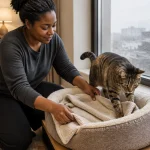
Offer a dry bed or blanket in a quiet spot away from cold drafts. The ASPCA’s cold weather safety tips recommend a warm place to sleep off the floor and away from all drafts. You can add a blanket to a bed your cat already uses, or make another resting spot available in a different part of the home. Let your cat decide which place feels comfortable.

Pay attention to where the bed sits, not just how warm the room feels. A bed beside a frequently opened door may be chilly when the door moves, while a dry, quiet corner can offer a more settled place to rest. Keep bedding dry and easy to reach.
Older or unwell cats may benefit from extra warm, draft-free resting places, according to International Cat Care. If your cat’s comfort or mobility seems to change, describe what you are noticing to your veterinarian rather than assuming the weather is the cause.
Keep drinking and eating steady when the house is cold
Continue your cat’s familiar feeding routine and keep fresh water easy to access. Winter guidance from Cornell and International Cat Care notes that some cats use more energy staying warm, but your cat’s needs depend on the individual. If you notice a change in appetite or are unsure whether to adjust portions, check with your veterinarian before changing the feeding plan.
For a cat that goes outdoors, take extra care with water left outside. International Cat Care recommends checking that it remains clean and has not frozen. If the cat comes inside wet, the ASPCA advises towel-drying pets, including paying attention to their feet.
A simple routine check can help you prepare for travel, too: confirm your cat’s usual food and water locations, what their normal meal routine looks like, and how you want a caregiver to handle any noticeable change. Keep those instructions current and specific to your cat.
Watch for the hazards colder months bring indoors and out
Warm places can attract cats, but some household heat sources pose a burn risk. International Cat Care advises protecting cats from open fireplaces, wood stoves and space heaters to prevent burns, and suggests placing blankets over radiators so a cat can enjoy that warmth more safely. Keep your cat away from open flames and heat sources they could contact. Do not leave a cat with access to a heat source that you are not comfortable using safely.
If your cat goes outdoors, winter hazards can follow them back inside. International Cat Care recommends wiping paws with a damp towel to remove rock salt or other chemicals that could be groomed off, and checking paws for signs of injury or irritation. Keep chemicals, including ice melts and antifreeze, out of reach and clean up spills promptly. Cornell notes that antifreeze is extremely toxic to cats and can attract them because of its taste.

Cats seeking warmth may also hide near a parked car’s wheels or under its hood. Cornell recommends checking wheel wells and tapping the hood or honking before starting the car. If you think your cat may have ingested antifreeze or another potential toxin, contact your veterinarian or ASPCA Poison Control at (888) 426-4435 immediately.
Keep a rainy-day routine that still gives the cat exercise
When wet weather keeps your cat indoors, make room for familiar activity. International Cat Care suggests options such as a scratching post, cat tower, puzzle feeder or toys when cats need to stay inside. Choose an activity your cat already enjoys, and give them the option to stop or move away.
A short play session can be part of the usual daily rhythm. You might use a wand toy or offer a puzzle feeder, then leave a comfortable place to rest. Keep the play area clear of breakable objects and anything your cat could chew or swallow. The point is to provide an indoor activity, not to make your cat interact when they are not interested.

If your cat is used to going outdoors, plan how you will keep them safely inside during severe weather or when conditions make outdoor access unsafe. International Cat Care advises keeping cats inside during snow or ice storms and very low temperatures. For cats that cannot be kept indoors, its guidance recommends secure, waterproof shelter and easy access back inside.
What to leave ready if you travel during the holidays
Before you leave, make the home as easy as possible for your cat to use comfortably. Set out dry bedding in a warm, draft-free spot, confirm your cat’s usual food and water arrangements, and leave familiar toys or enrichment options. If your cat goes outdoors, explain your normal routine and how you want the caregiver to handle wet paws and access to the home.
Write down your cat’s usual routine and any individual preferences that may affect care. Include the location of supplies, feeding instructions, the places your cat likes to rest, and what to do if you notice a change in appetite or behavior. Leave your veterinarian’s contact details and your preferred emergency veterinary clinic information. A caregiver can share observations, but a veterinarian should guide health decisions.
Mission Cats In-Home Care provides daily visits in Oakland. Each visit lasts up to 30 minutes and includes feeding-related care, fresh water, litter box cleaning, playtime and medication administration if necessary. Wellness notes and a photo update are available for $2 per cat, per visit. Mission Cats does not offer alternating-day visits, so consider the daily schedule when planning your trip.
Returning clients are asked to submit a care request at least 72 hours before service, and Mission Cats says it will respond within 24 hours with a confirmation for service. New clients can follow the registration route from the reservations page. For details about daily in-home care, review the current service information before making plans. A submitted request is not a confirmed booking.
If you’re planning a trip, start new-client registration or submit a care request for your travel dates. For questions, call (800) 580-5612.
Disclaimer: This article is provided for general informational and educational purposes only. It does not constitute veterinary, medical, behavioral, legal, security, travel, emergency, or other professional advice. Every cat and household is different. Services, rates, policies, staffing, geographic coverage, and availability may change. Readers should confirm current information directly with Mission Cats In-Home Care and consult a licensed veterinarian or other qualified professional before acting. References to outside organizations, products, providers, or resources do not imply endorsement, partnership, availability, or guaranteed results. Submission of an inquiry, registration, or reservation request does not guarantee service or confirm a booking.