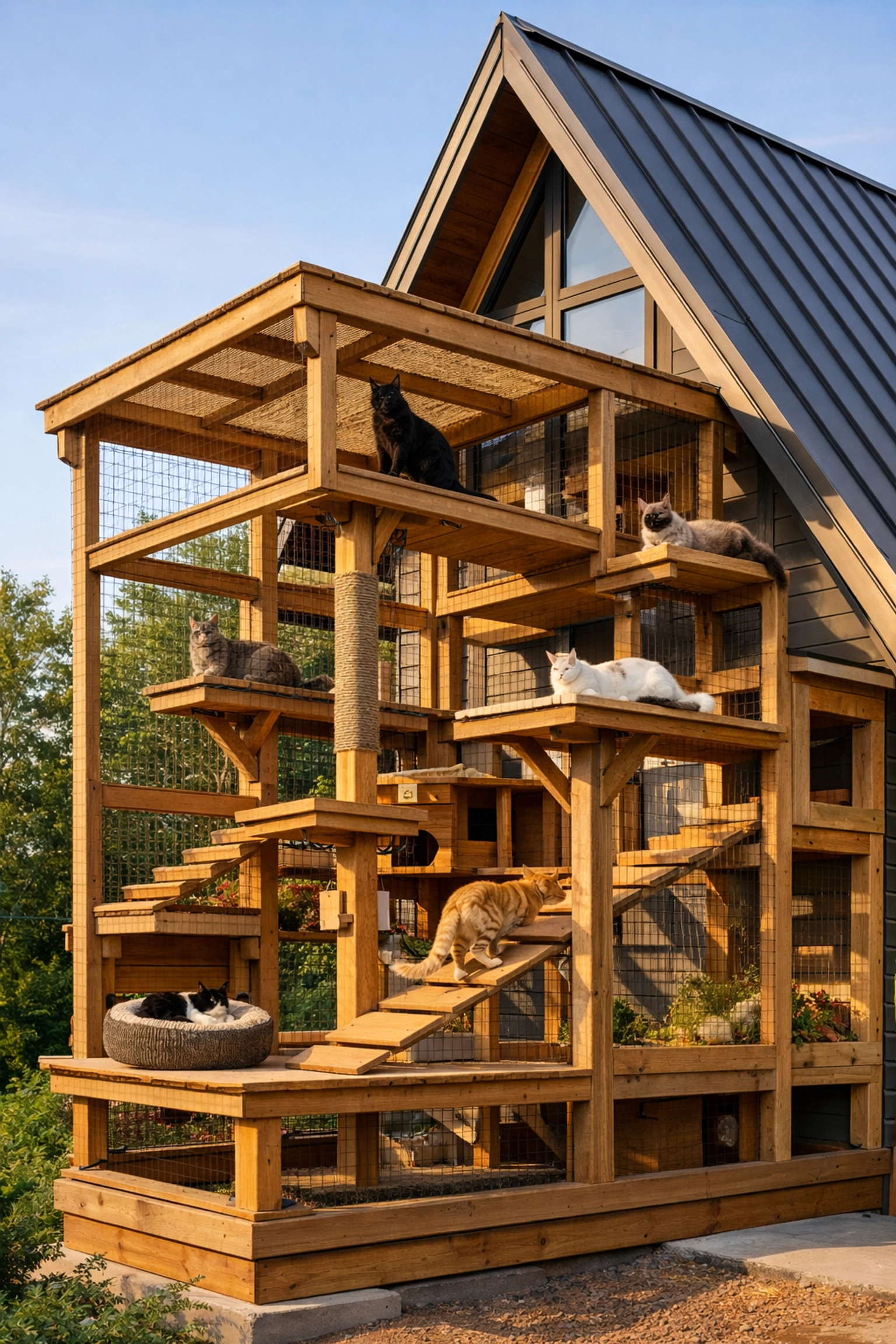
If you think spending six figures on your cat's backyard retreat sounds excessive, you haven't met Ryan Lapinski. The 36-year-old New Jersey YouTuber just dropped $125,000 on a custom catio, an enclosed outdoor patio designed exclusively for his 10-cat household. And he's not alone. Cat ownership jumped 23% in 2024, with 49 million U.S. households now home to felines, according to the American Pet Products Association [2]. Birthday parties for cats? Up 250% since 2018. Welcome to the golden age of cat ownership, where your tabby isn't just a pet, she's a lifestyle investment.
From Dog Guy to $125K Cat Dad: The Ryan Lapinski Conversion
Ryan Lapinski wasn't always a cat person. Growing up, he was strictly team canine. But in October 2019, an eight-week-old feral kitten showed up on his parents' deck, and everything changed. He adopted the black kitten, Ebony, and soon welcomed the rest of her feline family when they appeared later. By the time Lapinski purchased his 2,732-square-foot A-frame home in rural Burlington County, he was caring for seven cats of his own plus three fosters, as reported by the Wall Street Journal [1].
The problem? Lapinski wanted his cats to experience the outdoors without the constant worry of them wandering off or encountering predators. His solution was a custom-built catio that cost more than many Americans' annual salaries. "The cats can enjoy the air and sunbathe outside," Lapinski explained in interviews [1]. The structure isn't just four walls and a roof, it's a multi-level paradise with climbing structures, perches, and safe access to fresh air and natural stimulation.
Lapinski's story illustrates a broader shift in how Americans view their feline companions. Cats are no longer relegated to the role of pest control or distant house fixtures. They're family members deserving of thoughtful environmental design and substantial financial investment.
The Numbers Behind the Boom: A 23% Surge in One Year
The statistics tell a compelling story. Cat ownership in the U.S. rose from 40 million households in 2023 to 49 million in 2024, a 23% increase in just 12 months, according to APPA data [2]. To put that in perspective, approximately 24% of U.S. households now own at least one cat, based on AVMA statistics [10].
But it's not just about quantity. The quality of care, and the spending to match, has skyrocketed. The pet luxury products market reached $6.68 billion in 2025, with a projected annual growth rate of 5.44% [5]. Birthday and holiday parties for cats increased by 250% between 2018 and 2024, according to APPA's trend report [2]. Major luxury brands including Hermès, Gucci, and Louis Vuitton have entered the pet products space, offering high-end carriers, beds, and accessories [8].
Petfood Industry analysts attribute the surge to several converging factors [5]:
- Millennials as primary pet owners: This generation (representing 30-33% of pet owners) tends to view pets as "starter children" and prioritizes premium care [2]
- Housing market shifts: Younger Americans increasingly rent rather than own homes, making cats a more practical pet choice than dogs [3]
- Post-pandemic companionship: Remote work normalized having pets at home full-time, deepening owner-pet bonds
- Social media influence: Instagram-famous cats have normalized lavish pet lifestyles and created aspirational standards
The global pet industry is projected to reach $300 billion by 2030, according to market research by Dogtopia [8]. Cat owners are increasingly willing to spend on premium food, veterinary care, behavioral consultations, and environmental enrichment.
The Science of the Catio: Why Experts Like Daniel "DQ" Quagliozzi Are All In
Daniel "DQ" Quagliozzi, a certified feline training and behavior specialist based in San Francisco, has witnessed firsthand the explosion in catio interest. "I've seen a noticeable increase in interest about catios from cat guardians, especially those living in urban or suburban environments who want to offer their cats safe outdoor time without the risks of free-roaming," Quagliozzi told industry publications [4].
The behaviorist attributes the growth to several factors: recommendations by rescue organizations, veterinarians pushing for safer outdoor alternatives, and an increased presence by catio contractors at events like CatCon in Pasadena [4]. But beyond the trend, there's solid science supporting catios as a welfare tool.
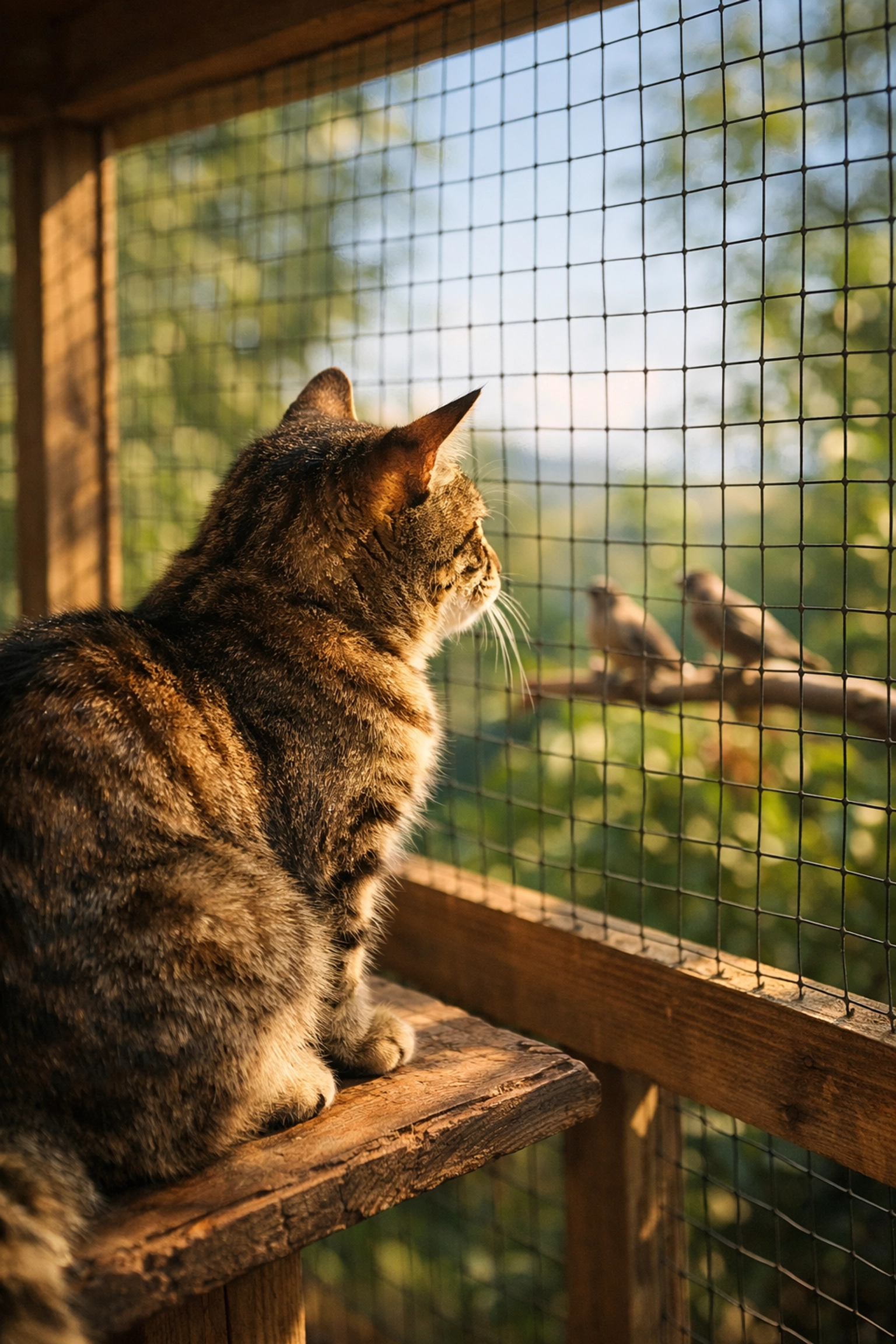
A University of Lincoln study published in Frontiers in Veterinary Science found that secure outdoor enclosures significantly improve cat welfare by providing environmental enrichment while eliminating outdoor risks [12]. The Journal of Veterinary Behavior introduced a new feline welfare assessment tool specifically designed to evaluate catio effectiveness in 2021 [6].
Research compiled by Asheville Humane Society identifies six primary benefits of catios [7]:
- Mental stimulation: Access to natural sights, sounds, and smells reduces boredom
- Physical exercise: Multi-level structures encourage climbing and jumping
- Stress reduction: Outdoor time without territorial conflicts or predator threats
- Natural behaviors: Cats can engage in species-appropriate activities like bird watching and basking
- Owner peace of mind: No worry about traffic, toxins, or wildlife encounters
- Compromise solution: Satisfies both indoor-only safety advocates and owners who want outdoor enrichment
ScienceDirect's systematic review of social and environmental factors for indoor cat welfare emphasizes that "environmental complexity" is one of the strongest predictors of feline psychological health [9]. Catios deliver that complexity in a controlled package.
For urban and suburban Bay Area residents in San Francisco, Oakland, Walnut Creek, and Palo Alto, space constraints make free-roaming particularly dangerous. Traffic, dense housing, and wildlife (hello, coyotes) create serious hazards. Catios offer the perfect middle ground.
Beyond the Catio: The Rise of Feline Luxury Lifestyles
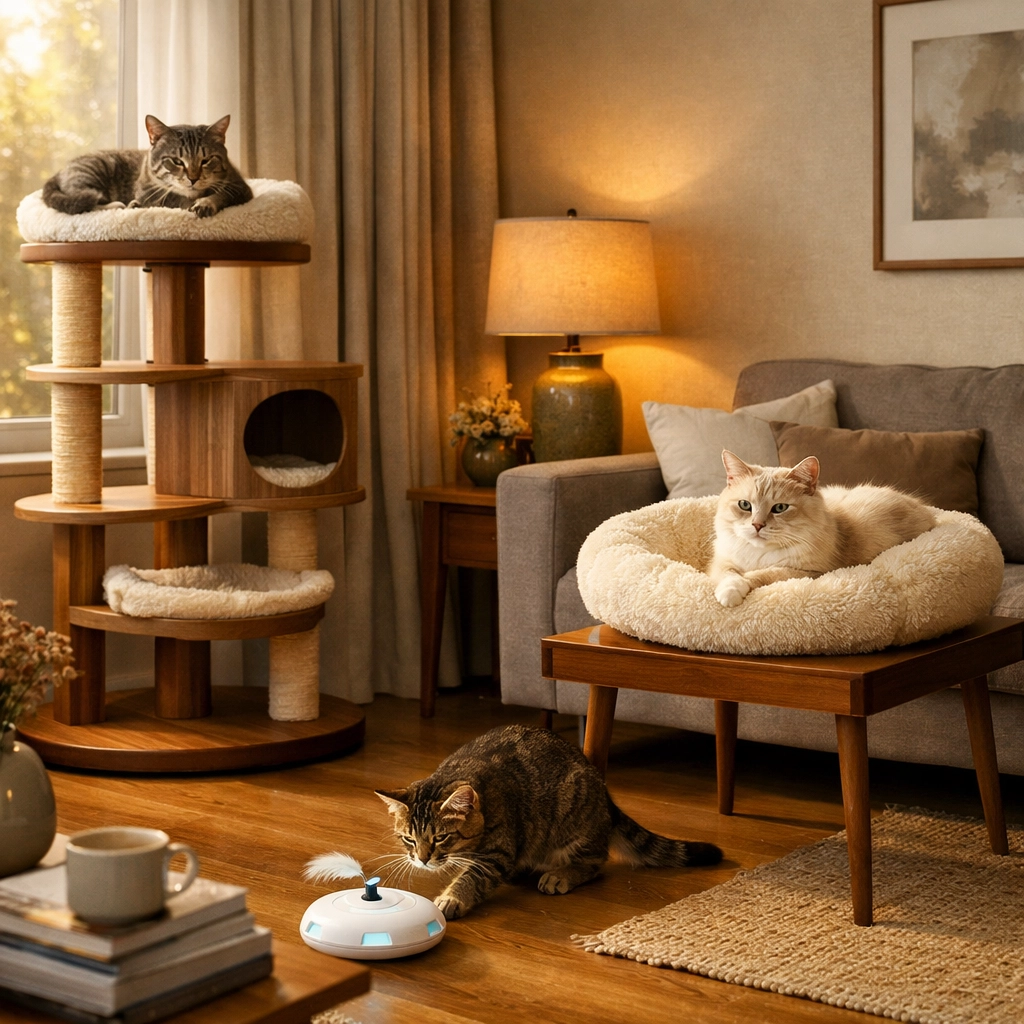
The catio is just one piece of the premium cat care puzzle. Kinship's profile of the "10 Most Pampered Pets on Earth" reveals a world where cats sleep on custom-made designer furniture, attend professional grooming sessions, and receive personalized meal plans from veterinary nutritionists [3].
The trend, dubbed "pet humanization" and "premiumization" by Pet Age magazine, reflects a fundamental shift in how owners relate to their animals [11]. Cats aren't accessories or background characters: they're household decision-makers whose needs influence vacation planning, home purchases, and daily schedules.
Consider the modern cat birthday party. What started as a quirky Instagram trend has evolved into a legitimate market segment. Party supply companies now offer cat-specific party packages complete with tuna "pupcakes," catnip party favors, and photo booth props. The 250% increase in cat celebrations documented by APPA isn't just about social media clout: it reflects a genuine desire to mark milestones in cats' lives [2].
The luxury spending extends to:
- Veterinary care: Owners increasingly opt for specialists, advanced diagnostics, and comprehensive wellness plans
- Behavioral consultations: Certified cat behaviorists like DQ Quagliozzi command premium rates for in-home assessments
- Premium nutrition: Raw diets, freeze-dried food, and prescription formulas tailored to individual health needs
- Smart technology: Automated feeders, interactive toys, and pet cameras with treat-dispensing features
- Designer accessories: Think $500 cat trees and $200 litter boxes with built-in odor control systems
Bay Area Adaptation: Luxury Cat Care in San Francisco, Oakland, and Beyond
The Bay Area presents unique challenges: and opportunities: for premium cat ownership. High housing costs mean many residents live in apartments or condos with limited outdoor space. But that hasn't stopped San Francisco, Oakland, Walnut Creek, and Palo Alto cat owners from embracing the luxury trend.
Balcony catios have become particularly popular in urban San Francisco neighborhoods like Mission, SOMA, and Russian Hill. These scaled-down versions of Lapinski's backyard palace attach to apartment balconies, providing vertical climbing space and outdoor access without requiring a yard. Local contractors report waitlists of several months for custom installations.
Oakland's larger lots and more affordable housing make full-scale catios more accessible, while Walnut Creek and Palo Alto residents with suburban properties are investing in elaborate outdoor structures that rival children's playhouses in complexity.
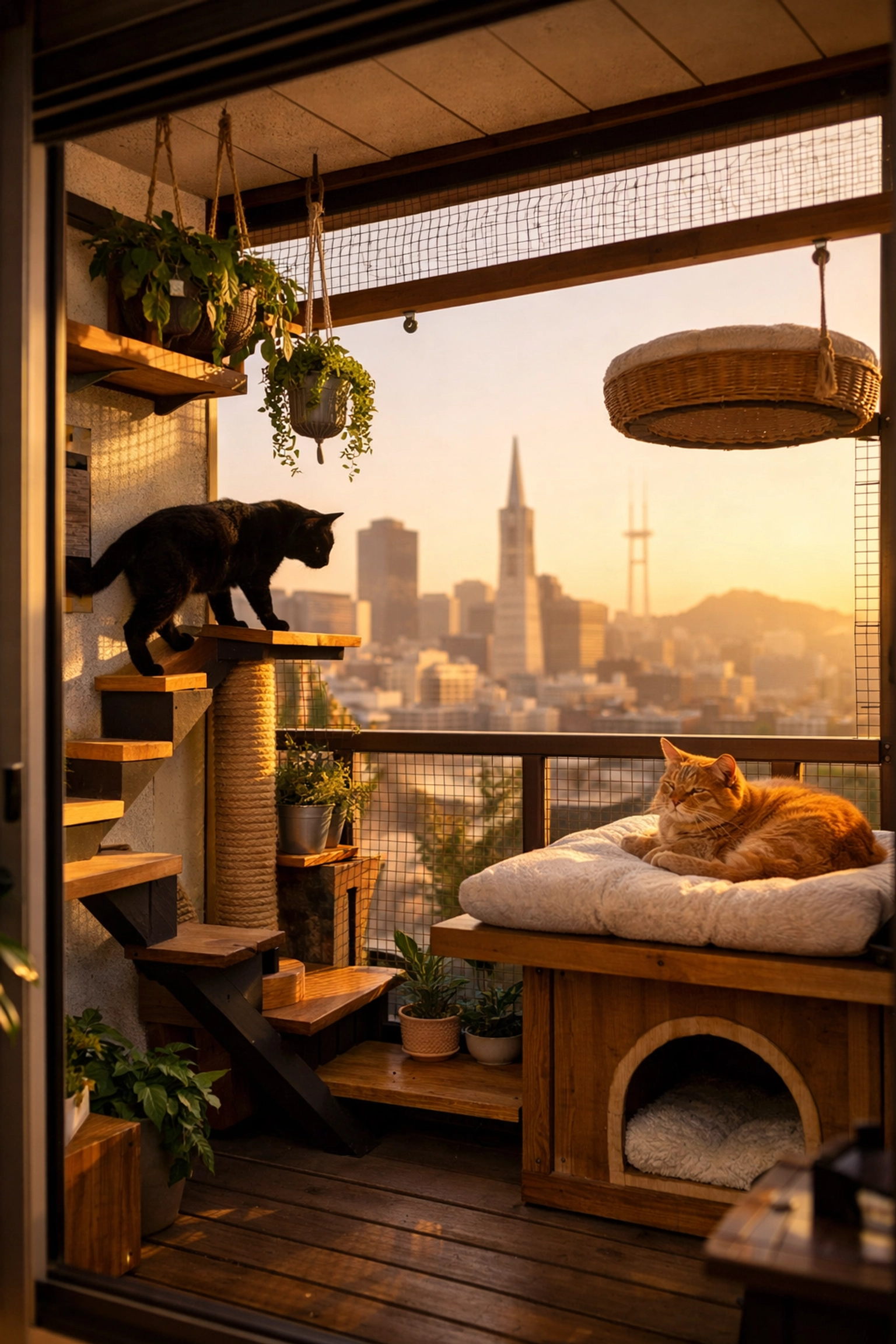
The Bay Area's tech-savvy population has also embraced smart cat care technology. Pet cameras with AI recognition that distinguish between cats and potential threats, automated litter boxes that track health metrics, and app-controlled feeders that adjust portions based on activity levels are all common sights in local households.
But here's the catch: all this premium infrastructure creates a new challenge. What happens when you travel?
Where Mission Cats In-Home Care Fits Into the Luxury Cat Lifestyle
This is where professional cat sitting services become essential. If you've invested in a $10,000 balcony catio, premium food, and a carefully curated environment, the last thing you want is to disrupt your cat's routine by boarding them in an unfamiliar facility. Your cat's home is her castle, literally: and she deserves to stay there.
At Mission Cats In-Home Care, we understand that luxury cat ownership isn't about spoiling pets: it's about providing species-appropriate care that honors their needs and personalities. Our professional cat sitters serve San Francisco, Oakland, Walnut Creek, and Palo Alto, bringing decades of combined experience to your home.
Here's what sets us apart:
We respect your investment. Whether you have a custom catio, specific feeding protocols, or medication schedules, our sitters follow your routines precisely. We're trained to notice subtle changes in behavior that might indicate health issues: crucial for cats whose owners have invested significantly in their wellbeing.
We provide the human connection. Cats like those in Lapinski's household thrive on routine and familiar faces. Our sitters don't just drop food and leave. We spend quality time with your cats, respecting their individual personalities. Some cats want playtime; others prefer quiet companionship. We adapt to each cat's needs.
We're equipped for complex care. Multi-cat households, special diets, medication administration, catio access management: we handle it all. Our sitters understand that premium cat care often involves multiple moving pieces, and we're detail-oriented professionals who take notes and communicate regularly.
We serve the entire Bay Area. From high-rise apartments in San Francisco to suburban homes in Palo Alto, from Oakland's diverse neighborhoods to Walnut Creek's family-friendly streets: wherever you live in the East Bay or Peninsula, we're there.
The rise of luxury cat ownership reflects a broader truth: cats deserve thoughtful, individualized care. Whether that means a six-figure catio or simply having a trusted professional check in daily while you're away, the principle is the same. Your cat's wellbeing matters.
If you're part of the 49 million households that welcomed a cat in 2024, or you're one of the Bay Area residents investing in premium feline care, contact Mission Cats In-Home Care today. Because cats who live in luxury deserve professional care that matches their lifestyle.
Book your in-home cat care with Mission Cats In-Home Care (MCIHC)
Need a reliable, cat-only sitter who keeps your cat comfortable at home (instead of a stressful boarding facility)? We’ve got you.
Service areas: San Francisco, Oakland, Emeryville, Walnut Creek, Palo Alto, and Atherton.
How to book:
- Start here: Visit www.missioncats.com to learn about our services and request care.
- Ready to schedule? Use our contact/booking page: https://www.missioncats.com/contact-us
- Tell us your dates + location: Include your travel dates, address/city, and anything your cat needs (food routine, meds, shy-cat notes, catio access, etc.) so we can match you with the right sitter.
If you’re traveling soon and want your cat cared for by experienced feline specialists, head to www.missioncats.com and book your visits today.
#MissionCatsInHomeCare #CatSitter #CatSitting #InHomeCatSitting #CatCare #CatCareServices #ProfessionalPetSitter #PetSittingServices #CatLoversOfInstagram #CatParents #BayAreaCats #BayAreaPetSitter #OaklandCats #SanFranciscoCats #WalnutCreekCats #PaloAltoCats #EastBayCats #SFTravel #PetCareTips #CatHealth
Sources
Story researched by MCIHC Staff.
[1] Wall Street Journal contributors, "Ryan Lapinski's Custom Catio Investment," WSJ/LinkedIn, October 2025, Referenced content, Accessed February 8, 2026.
[2] American Pet Products Association, "2025 Dog & Cat Report: Pet Ownership Trends and Statistics," APPA News, June 2025, https://www.americanpetproducts.org/, Accessed February 8, 2026.
[3] Kinship Editorial Team, "Meet the 10 Most Pampered Pets on Earth," Kinship, November 2025, https://www.kinship.com/, Accessed February 8, 2026.
[4] Go Cat Go SF, "Daniel DQ Quagliozzi: Certified Feline Training and Behavior Specialist Profile," Go Cat Go, 2025, Referenced content, Accessed February 8, 2026.
[5] Petfood Industry, "Cats and dogs lead US pet ownership growth from 2023 to 2025," Petfood Industry, June 2025, https://www.petfoodindustry.com/, Accessed February 8, 2026.
[6] Journal of Veterinary Behavior, "The Use of a New Feline Welfare Assessment Tool for Outdoor Catios," PMC/NIH, 2021, https://www.sciencedirect.com/, Accessed February 8, 2026.
[7] Asheville Humane Society, "Enhancing your cat's well-being: Top 6 benefits of outdoor catios," Asheville Humane Society, 2024, https://ashevillehumane.org/, Accessed February 8, 2026.
[8] Dogtopia, "Pet Care Industry Trends for 2026: Luxury Spending and Premium Products on the Rise," Dogtopia, December 2025, https://www.dogtopia.com/, Accessed February 8, 2026.
[9] ScienceDirect, "Systematic review of social and environmental factors affecting indoor cat welfare," Elsevier, 2019, https://www.sciencedirect.com/, Accessed February 8, 2026.
[10] American Veterinary Medical Association, "U.S. Pet Ownership Statistics 2024," AVMA, 2024, https://www.avma.org/, Accessed February 8, 2026.
[11] Pet Age, "The 2025 Marketing Shifts: Pet Humanization and Premiumization Trends," Pet Age, November 2025, https://www.petage.com/, Accessed February 8, 2026.
[12] Frontiers in Veterinary Science, "A Secure Outdoor Enclosure Benefits Cat Welfare: University of Lincoln Study," Frontiers, 2021, https://www.frontiersin.org/, Accessed February 8, 2026.