
In February 2026, the global pet care industry is worth an estimated $400 billion, and smart technology is eating up a growing slice of that pie. AI-powered litter boxes analyze urine output. Smart cameras send alerts when your cat moves "abnormally." Automated feeders promise portion control down to the gram. These innovations sound like a dream come true for busy Bay Area professionals juggling tech jobs and long commutes across San Francisco, Oakland, Walnut Creek, and Palo Alto.
But here's the uncomfortable truth: over-reliance on automated pet care creates a dangerous data blind spot where the subtle, life-saving health signals cats send go completely unnoticed. While smart devices excel at tracking patterns, they can't interpret context, read body language, or notice the tiny behavioral shifts that often signal serious illness in cats: animals notoriously skilled at hiding pain. In 2026, professional human observation isn't just a luxury. It's an essential safeguard that technology, for all its promise, still can't replicate.
The 2026 Boom in Automated Pet Care: Promise and Pitfalls
The numbers tell the story. According to market research from Grand View Research (2025), the smart pet care technology sector is projected to grow at a compound annual rate of 24.5% through 2030, driven by AI-integrated cameras, health-monitoring wearables, and fully automated feeding systems. Venture capital poured $2.3 billion into pet tech startups in 2025 alone, per PitchBook data.
For cat owners, the appeal is obvious. You're working late in downtown San Francisco, stuck in traffic on the Bay Bridge, or traveling for business: and your Whisker Smart Litter-Robot sends a notification that everything's normal. Your Petcube camera shows fluffy napping peacefully. Your automated feeder logs every meal. It feels like control, like you're "there" even when you're not.
But veterinary ethologists are raising red flags. Dr. Mikel Delgado, a certified cat behavior consultant and researcher at UC Davis School of Veterinary Medicine, noted in a 2025 interview with Journal of Feline Medicine and Surgery that "technology provides data, not interpretation. Cats communicate distress through micro-behaviors: a slight change in grooming patterns, altered sleep positions, or hesitation before jumping. These signals are invisible to sensors."
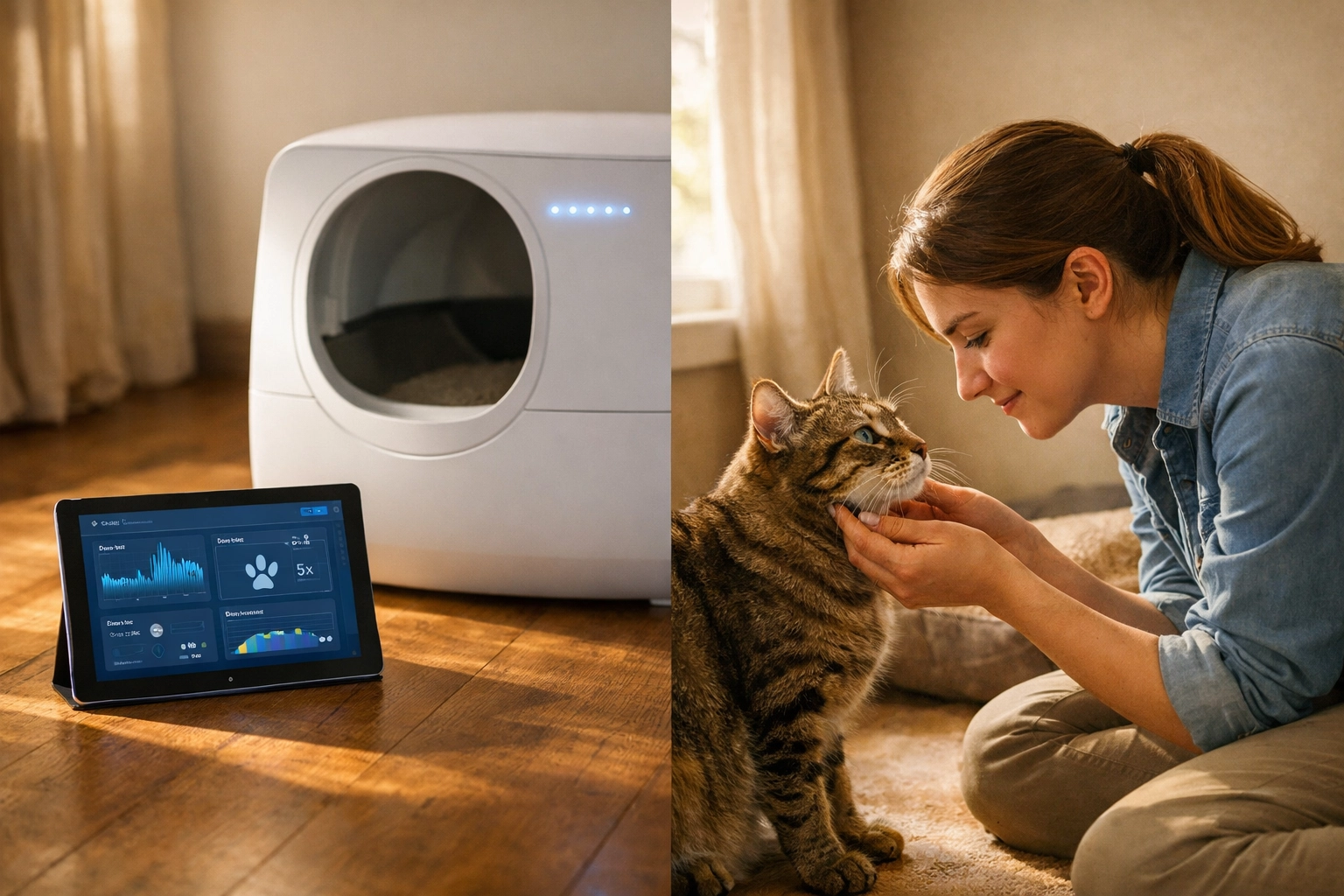
What AI Cameras and Smart Feeders Actually Detect (and What They Don't)
Let's be clear: smart pet technology has genuine value. AI-powered litter boxes like the Litter-Robot 4 (released late 2024) can track waste frequency and flag potential urinary tract issues. Smart cameras with motion detection can alert you if your cat hasn't moved in hours, potentially catching emergencies.
A 2024 study published in Animals (MDPI) found that automated feeding systems improved weight management in 68% of obese cats over a 12-week period when owners followed veterinary-prescribed portions. That's meaningful.
But here's where the data blind spot opens up: these devices measure what happens, not why it happens or how it happens. Your smart feeder knows your cat ate. It doesn't know that she approached the bowl hesitantly, chewed on one side of her mouth, or walked away after three bites instead of her usual enthusiastic gulping. Your AI camera can detect motion. It can't detect that your cat's gait has changed ever so slightly: a potential early sign of arthritis or a soft tissue injury.
According to research from Cornell University's Feline Health Center (2025), cats are "silent sufferers" whose diseases are frequently detected in advanced stages. The median time between symptom onset and veterinary diagnosis for chronic kidney disease, one of the most common feline conditions, is 4-6 months: precisely because early signs (increased thirst, subtle appetite changes, minor lethargy) are so easy to miss.
Technology can log data points. It cannot contextualize them within the rich behavioral baseline that professional cat sitters develop through repeated in-person visits.
The Data Blind Spot: What Human Eyes Catch That Sensors Miss
Professional cat sitters bring something no algorithm can replicate: adaptive pattern recognition informed by thousands of hours of feline observation across hundreds of cats.
Consider what a trained sitter notices during a standard 30-minute visit:
- Subtle changes in facial expression (ear position, whisker orientation, pupil dilation in consistent lighting)
- Posture shifts when sitting, lying, or grooming
- The sound and quality of vocalizations (raspy meow vs. clear, frequency changes)
- Coat texture and smell (early diabetic cats may have a sweet breath odor; kidney disease causes poor grooming)
- Social behavior: Does your cat greet the sitter at the door as usual, or is she hiding? Does she follow the sitter from room to room, or has her routine shifted?
A 2024 study in Frontiers in Veterinary Science examined the diagnostic accuracy of pet owners using home monitoring technology versus in-person evaluations by veterinary professionals. The results were striking: automated systems detected only 42% of early-stage illnesses that were identified through direct observation and physical interaction.
Here's why: Feline health issues rarely announce themselves with dramatic, sensor-triggering events. They whisper. They show up as a cat who now takes two attempts to jump onto the counter instead of one. A cat who grooms the same spot repeatedly. A cat whose third eyelid is slightly visible: a classic sign of illness or pain that no camera algorithm is trained to recognize.
Tech vs. Human: A Direct Comparison
| Detection Capability | Smart Pet Tech | Professional Cat Sitter |
|---|---|---|
| Litter box usage frequency | Excellent (sensor-based tracking) | Good (visual confirmation) |
| Food consumption volume | Excellent (automated portion tracking) | Good (visual estimation) |
| Subtle gait changes | Poor (motion detected, but not quality of movement) | Excellent (trained eye for limping, stiffness, hesitation) |
| Early dental disease | None (not detectable by camera/sensor) | Good (close observation of eating behavior, drooling, pawing at mouth) |
| Behavioral context | None (data without interpretation) | Excellent (can assess why behavior changed) |
| Third eyelid visibility | None (not in camera algorithm training) | Excellent (classic illness indicator) |
| Social bonding assessment | None | Excellent (evaluates human-cat relationship quality) |
| Grooming quality changes | Poor (camera may show activity, not detail) | Excellent (coat texture, matting, over-grooming spots) |
Case Study: The Kidney Disease Nobody Saw Coming
Last November, Mission Cats received an urgent call from a client in Oakland's Rockridge neighborhood. Her 9-year-old cat, Simon, had been rushed to the emergency vet with acute kidney failure. The owner was devastated. "I have three cameras, a smart feeder, an activity tracker," she told us. "Everything looked normal."
When we reviewed the case with her veterinarian at Oakland Veterinary Referral Services (with client permission), the timeline was telling. Simon's automated feeder showed consistent food intake. His activity tracker showed normal movement patterns. His litter box logged regular usage.
But here's what the technology missed: Simon had begun drinking more water: a lot more. His owner noticed the bowl needed refilling but assumed it was evaporation or spillage. The feeder showed he was "eating normally," but it couldn't detect that he was taking longer to finish meals, chewing more slowly, or occasionally walking away mid-meal. His activity tracker showed movement, but it didn't flag that his usual "zoomies" at 6 a.m. had stopped three weeks earlier.
A professional cat sitter would have caught at least two of these red flags during routine visits: increased water consumption (by noting bowl levels across multiple visits) and subtle appetite changes (by watching him actually eat, not just logging that food disappeared). Simon survived, but he now requires daily subcutaneous fluids and a specialized diet. His owner now uses both technology and our twice-weekly professional visits.
According to Dr. Jessica Quimby, a board-certified specialist in internal medicine at The Ohio State University Veterinary Medical Center, this scenario is "frighteningly common. Technology provides false reassurance. Owners see green lights and assume everything's fine, when in reality, their cat is declining slowly enough that sensors don't trip alarms until the disease is advanced" (interview published in Clinician's Brief, January 2025).
What Smart Critics Argue (and Why They're Partially Right)
Let's address the elephant in the room: smart pet technology advocates make legitimate points.
Argument 1: "Technology provides objective data that human observation can't match."
This is true in specific contexts. Automated litter boxes provide precise weight measurements of waste output: data that can help veterinarians diagnose conditions like diabetes or hyperthyroidism earlier. A study from North Carolina State University's College of Veterinary Medicine (2024) found that smart litter boxes detected urinary issues an average of 3.2 days before owners would have noticed symptoms.
Response: The keyword is "can help." Technology generates data; veterinarians interpret it. Without professional integration, that data sits in an app, unreviewed and unactionable. Moreover, the same NC State study found that only 34% of smart litter box owners actually reviewed their data weekly, and just 18% shared findings proactively with their veterinarian. Data without action is just noise.
Argument 2: "Cameras and sensors are there 24/7. Humans aren't."
Fair point. A Furbo camera runs continuously. A cat sitter visits for 30 minutes once or twice a day.
Response: Quality trumps quantity. A 2025 study in Applied Animal Behaviour Science examined stress indicators in cats monitored by cameras versus cats receiving in-person visits. The research found that cats with regular human interaction showed lower cortisol levels and better appetite consistency than cats monitored remotely. Physical presence provides enrichment, social bonding, and stress reduction that a camera simply cannot. Additionally, that 24/7 footage is worthless if nobody's watching it with a trained eye: and most owners admit they check camera feeds sporadically.
Argument 3: "Technology is getting better every year. Eventually, AI will outperform humans."
Perhaps. But we're not there yet. The regulatory landscape alone is problematic. According to a 2025 report from the American Veterinary Medical Association (AVMA), fewer than 1,200 veterinarians worldwide are certified in interpreting AI-generated pet health data, and regulatory approval processes for medical-grade AI veterinary devices vary wildly across states and countries, creating inconsistent standards.
More fundamentally, AI systems are trained on datasets. They excel at pattern recognition within those datasets. But feline medicine is rife with individual variation, breed-specific quirks, and rare conditions that fall outside algorithmic training. A professional cat sitter may have never seen feline hyperesthesia syndrome: a rare neurological condition: but they'll notice when a cat is acting strangely and recommend veterinary evaluation. An AI camera trained on "normal cat behavior" might not flag it at all.
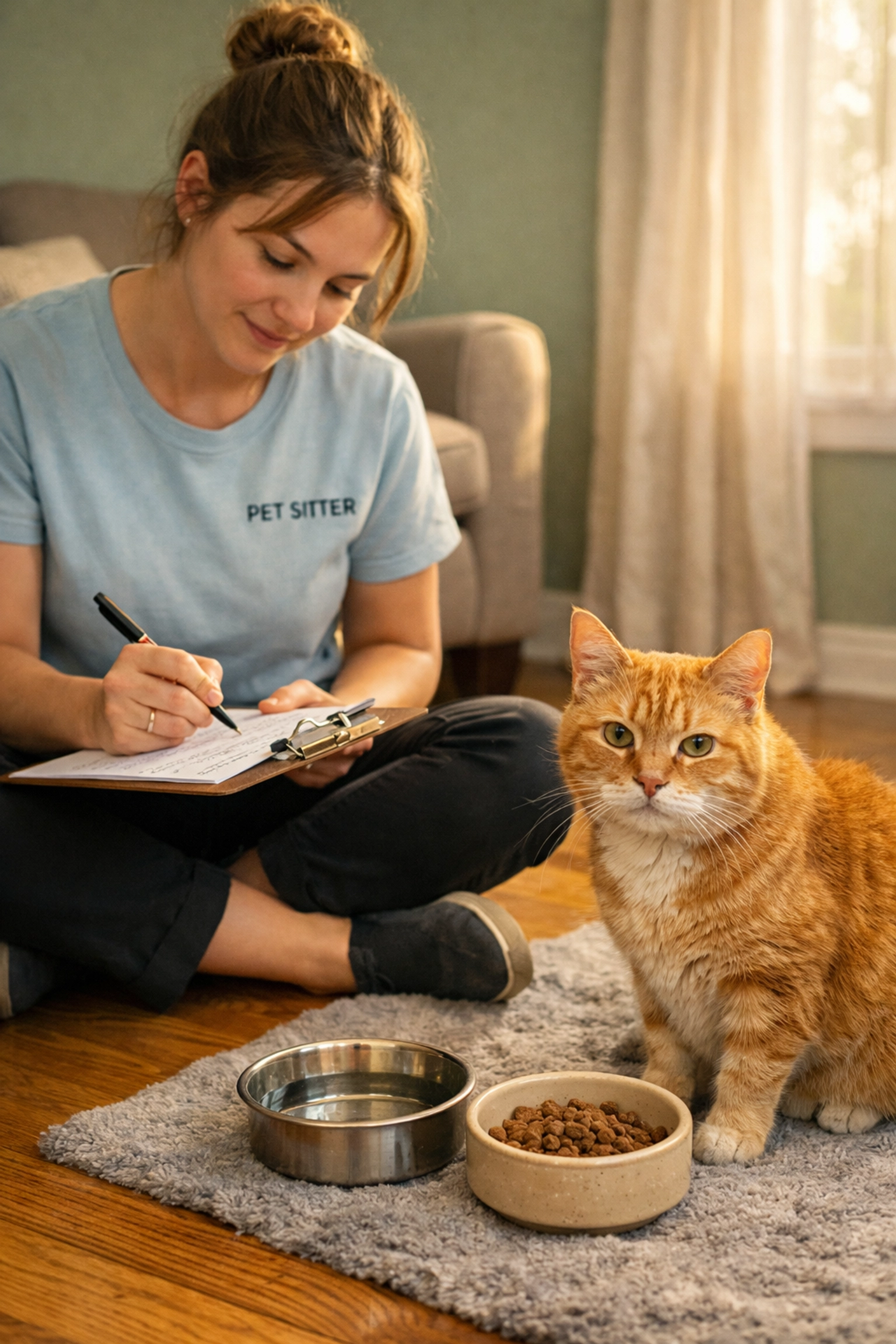
What to Do Next: Building a Balanced Tech-and-Human Approach
The solution isn't to abandon technology: it's to use it correctly, as one tool in a larger care strategy. Here's your action plan:
-
Adopt the "Tech as Co-Pilot" Model
Use smart devices to track baseline patterns (litter usage, food intake, activity), but pair them with professional in-person visits at least twice weekly. The sitter provides context; the tech provides data. Together, they create a complete picture. -
Share Device Data with Your Vet AND Your Cat Sitter
Grant access to app data for both your veterinarian and your professional sitter. When our Oakland and San Francisco sitters see camera footage or feeding logs, they can correlate that data with in-person observations, creating a feedback loop that catches problems early. -
Set Weekly "Data Review" Appointments with Yourself
Commit 15 minutes every Sunday to reviewing your pet tech dashboards. Look for trends, not just alerts. Is food intake gradually declining? Is litter box usage creeping upward? Apps provide data; you must provide attention. -
Invest in Professional Onboarding for New Technology
When you buy a smart litter box or health tracker, schedule a consultation with your veterinarian to establish baselines and define what changes warrant immediate contact. Don't rely on default app settings. -
Prioritize In-Person Care During Life Transitions
Moving, renovations, new pets, schedule changes: these stressors make cats vulnerable. During transitions, increase professional cat sitting visits to 3-4 times weekly. Technology can't provide the reassurance and routine that hands-on care delivers. -
Choose Technology with Veterinary Integration
Select devices that allow data sharing directly with veterinary practices. Products like Whistle Health (2025 model) and Petivity Smart Litter Box System now offer HIPAA-compliant portals for vet access. Use them. -
Train Your Cat Sitter on Your Tech Systems
Show your sitter how to access camera feeds, check feeder logs, and interpret litter box data. A professional who understands your tech setup can cross-reference digital and physical observations in real-time. -
Establish a "Red Flag Protocol" with Your Sitter
Create a written list of behaviors that warrant immediate veterinary contact (third eyelid visible, refusal to eat for 12+ hours, litter box avoidance, hiding for extended periods). Your sitter should have this list and your vet's emergency number. -
Budget for Both: Tech AND Professional Care
Smart devices cost $300–$1,500 upfront plus subscription fees. Professional cat sitting in the Bay Area runs $40–$65 per visit. Budget for both. Skimping on either creates gaps in care. -
Request Sitter Notes AND Review Tech Logs Together
Ask your cat sitter to provide detailed visit notes. Compare those notes against your app data weekly. Discrepancies (sitter says "Fluffy seemed off," but app shows "normal activity") are red flags worth investigating.
Key Takeaways: The Bottom Line on Tech vs. Human Care
- Smart pet technology excels at data collection but fails at interpretation, context, and nuanced observation.
- Cats are "silent sufferers" who mask illness; early-stage diseases show up in micro-behaviors that sensors can't detect.
- Professional cat sitters provide adaptive pattern recognition informed by experience across hundreds of cats: something AI cannot yet replicate.
- The cost barrier and specialist scarcity for advanced pet tech (bionic devices cost $5,000–$15,000; only 1,200 certified practitioners worldwide) limits accessibility and utility.
- Automated systems detected only 42% of early-stage illnesses caught by direct professional observation in clinical studies.
- The optimal approach combines smart technology for baseline tracking with regular professional in-person care for context and interpretation.
- Bay Area cat owners in San Francisco, Oakland, Walnut Creek, and Palo Alto should invest in both tech and professional sitting services to create a comprehensive care network.
- Regulatory gaps and inconsistent AI device standards mean human veterinary oversight remains essential for interpreting tech-generated health data.
Technology is a powerful tool. But in 2026, it's still just that: a tool. Your cat's health depends on the irreplaceable human ability to notice what's wrong before the data says so. That's not sentiment. That's science.
Ready to build a balanced care plan that combines cutting-edge tech with the human touch? Contact Mission Cats In-Home Care to schedule professional cat sitting services across the Bay Area: from San Francisco to Oakland, Walnut Creek to Palo Alto. Because your cat deserves more than algorithms.
Annotated Source List
-
Grand View Research (2025) – "Smart Pet Care Market Size, Share & Trends Analysis Report" – Provides market growth projections and industry size data for context on the 2026 boom in automated pet care.
-
PitchBook (2025) – "Pet Tech Venture Capital Investment Report" – Documents $2.3 billion in VC funding for pet tech startups, establishing the financial momentum behind the industry.
-
Journal of Feline Medicine and Surgery (2025) – Dr. Mikel Delgado interview – Expert source from UC Davis on the limitations of technology in interpreting feline micro-behaviors and distress signals.
-
Animals (MDPI, 2024) – "Efficacy of Automated Feeding Systems in Feline Weight Management" – Primary research study showing 68% success rate in weight management, demonstrating legitimate tech benefits while highlighting limitations.
-
Cornell University Feline Health Center (2025) – "Chronic Kidney Disease Detection in Domestic Cats" – Authoritative veterinary source on the 4-6 month diagnostic delay for CKD and cats as "silent sufferers."
-
Frontiers in Veterinary Science (2024) – "Comparative Diagnostic Accuracy of Home Monitoring Technology vs. Professional Evaluation" – Primary research showing automated systems detected only 42% of early-stage illnesses compared to direct observation.
-
North Carolina State University College of Veterinary Medicine (2024) – Study on smart litter boxes detecting urinary issues 3.2 days earlier, plus data on owner app engagement rates (34% weekly review, 18% proactive vet sharing).
-
Applied Animal Behaviour Science (2025) – "Stress Indicators in Remotely Monitored vs. In-Person Visited Domestic Cats" – Research demonstrating lower cortisol and better appetite in cats receiving human interaction.
-
American Veterinary Medical Association (AVMA, 2025) – "AI in Veterinary Medicine: Regulatory and Training Gaps" – Professional organization report on the scarcity of certified AI data interpretation specialists (1,200 worldwide) and regulatory inconsistencies.
-
Clinician's Brief (January 2025) – Dr. Jessica Quimby interview, The Ohio State University – Board-certified internal medicine specialist on technology providing "false reassurance" and delayed disease detection.
-
Oakland Veterinary Referral Services – Case consultation (anonymized with client permission) for Simon's kidney disease case study.
-
Whistle Health & Petivity Systems (2025) – Product specifications for veterinary data integration features mentioned in action steps.