
Last Saturday, Sarah discovered that a simple bouquet of Stargazer lilies from the local market could lead to a frantic 2:00 AM trip to the emergency vet after learning the hard way about toxic flowers for cats. It is a terrifying scenario that plays out too often in our city. We all want our Victorian flats to look like a botanical oasis, especially since a 2023 survey showed that 65% of San Francisco households now include at least one feline roommate.
You shouldn’t have to choose between a chic centerpiece and your cat’s safety. This guide identifies the most common dangerous blooms found in Bay Area shops and suggests beautiful, 100% safe alternatives for your home. We will break down which petals to avoid, the symptoms to watch for if your kitty gets curious, and how to keep your space a meow-velous sanctuary for your Very Important Pussycats.
Trusted Care for the Cats You Love, Right at Home
When you travel, your cat deserves more than a quick check-in. Mission Cats In-Home Care provides reliable, loving, professional care in the comfort of your cat’s own home, so you leave with confidence and return to a calm, well-cared-for companion.
Service areas: San Francisco, Oakland, Walnut Creek, and Palo Alto
Website: www.missioncats.com
Email: missioncats@missioncats.com
(800) 580-5612, (415) 376-6082, (415) 437-2287, Oakland: (510) 315-6446, San Francisco: (415) 528-5471, Palo Alto: (650) 425-3444, Walnut Creek: (925) 376-1300
Key Takeaways
-
Identify the "Big Three" floral foes—lilies, tulips, and azaleas—that pose the most serious health risks to your San Francisco feline.
-
Learn to recognize the subtle red flags of poisoning and why immediate action is vital if your pet encounters toxic flowers for cats.
-
Discover "purr-sonalized" floral alternatives like roses and sunflowers that let you enjoy a beautiful home without compromising your cat’s safety.
-
Master clever decorating hacks, from high-shelf placement to glass terrariums, to keep curious nibblers away from your favorite bouquets.
-
See how professional in-home sitters offer a level of health monitoring and behavioral observation that traditional boarding facilities simply can’t match.
Table of Contents
The "No-Go" Garden: Why Toxic Flowers for Cats Matter in the Bay Area
San Francisco living often means trading a sprawling backyard for a sunny Mission District windowsill. For our indoor-only felines, those windowsills represent their entire world. When you bring home a fresh bundle of blooms from the Ferry Building Farmers Market, your cat sees a new, interactive toy rather than a simple decorative centerpiece. This natural curiosity makes identifying toxic flowers for cats a mandatory skill for every Bay Area pet parent. While we worry about the traffic on 19th Avenue, the real danger might be sitting right on your dining room table.
Indoor cats in compact city apartments are actually at a higher risk for plant poisoning than their outdoor counterparts. Outside, a cat has a world of grass and safe weeds to nibble on. Inside, your decorative arrangement is the only greenery available. If your cat is craving fiber or just looking for a way to pass the time while you are commuting on BART, they will eventually take a bite. Understanding the "why" behind this behavior is the first step in keeping your Very Important Pussycats safe and sound.
The Feline Curios-cat-y Factor
Cats are tiny, furry scientists who explore their environment with their mouths. Boredom is a primary driver for plant chewing; in a quiet apartment, a swaying petal is essentially a feline fidget spinner. The texture of certain leaves, especially those with a papery or "crinkly" feel, mimics the wings of prey insects. Kittens and young cats under the age of 2 are the most frequent taste-testers. Data from veterinary emergency rooms suggests that younger cats are 30% more likely to ingest foreign botanical material than older, more cynical seniors who prefer their kibble.
Toxicity Levels: From Tummy Aches to True Emergencies
The word "toxic" covers a broad spectrum in the feline world. Some toxic flowers for cats cause localized irritation, like a swollen lip or a bout of drooling. Others are systemic killers. Cats are biologically unique; they lack specific glucuronosyltransferase liver enzymes required to break down certain plant compounds. This metabolic gap means that chemicals humans or even dogs can process will instead build up in a cat’s system, leading to organ failure. The ASPCA Poison Control Center, which handles over 400,000 cases annually, remains the gold standard for identifying these risks. Always check the scientific names when shopping. A "Peace Lily" (Spathiphyllum) causes mouth pain, but a "True Lily" (Lilium) can cause total kidney failure within 36 hours.
Trusted Care for the Cats You Love, Right at Home
When you travel, your cat deserves more than a quick check-in. Mission Cats In-Home Care provides reliable, loving, professional care in the comfort of your cat’s own home, so you leave with confidence and return to a calm, well-cared-for companion.
Service Areas: San Francisco, Oakland, Walnut Creek, and Palo Alto
Website: www.missioncats.com
Email: missioncats@missioncats.com
Phone: (800) 580-5612, (415) 376-6082, (415) 437-2287
Oakland: (510) 315-6446
San Francisco: (415) 528-5471
Palo Alto: (650) 425-3444
Walnut Creek: (925) 376-1300
The "Big Three" Feline Foes: Lilies, Tulips, and Azaleas
While we love a meow-velous bouquet on the dining table, some stems are strictly off-limits for our Very Important Pussycats. In San Francisco, where boutique flower shops line every corner from Noe Valley to the Marina, it is vital to know which petals are purr-ilous. These "Big Three" represent the most common toxic flowers for cats found in local homes and gardens, and they require a zero-tolerance policy to keep your feline family safe.
Lilies: The Ultimate Red Alert
If there is one flower to banish from your home forever, it is the lily. We are specifically talking about True Lilies (Lilium) and Daylilies (Hemerocallis). These are not just mildly irritating; they are a full-blown emergency. The mechanism of toxicity is so aggressive that a single grain of pollen on a paw or even a few licks of the water in the vase can cause acute kidney failure. This damage often becomes irreversible within 24 to 72 hours. Do not confuse these with Peace Lilies or Calla Lilies. While those can cause mouth irritation and drooling, they do not cause the fatal organ failure associated with True Lilies. If a Tiger or Stargazer lily enters your SF flat, it is time for a literal house cleaning.
Spring Bulbs in the Mission and East Bay
Whether you are browsing the flower stalls in the Mission or planting a seasonal garden in the East Bay, be wary of Tulips and Hyacinths. The bulbs are the most dangerous part of these spring favorites because they contain the highest concentration of allergenic lactones. If your curious digger gets into a bag of unplanted bulbs, you might see heavy drooling, persistent vomiting, and even cardiac arrhythmias. These heart rhythm issues are serious and require immediate veterinary intervention. If you are worried about your cat’s safety while you are at work or traveling, our team can help keep a close eye on their environment. Let’s connect to ensure your home stays a safe sanctuary.
Azaleas: The Pretty Poison in Your Backyard
Azaleas and Rhododendrons are staples of Bay Area landscaping, but they contain grayanotoxins that are a total cat-astrophe. These toxins interfere with a cat’s skeletal and cardiac muscle function by preventing cells from returning to their resting state. Research shows that ingesting just 0.2 percent of a cat’s body weight in leaves can lead to severe poisoning. Common signs include physical weakness, depression, and tremors. For SF gardeners wanting that vibrant pop of color without the toxic flowers for cats risk, consider planting Camellias instead. They offer a similar lush look but are much safer for your feline housemates who might enjoy a supervised stroll in the yard.
Trusted Care for the Cats You Love, Right at Home
When you travel, your cat deserves more than a quick check-in. Mission Cats In-Home Care provides reliable, loving, professional care in the comfort of your cat’s own home, so you leave with confidence and return to a calm, well-cared-for companion.
Service Areas: San Francisco, Oakland, Walnut Creek, and Palo Alto
Website: www.missioncats.com
Email: missioncats@missioncats.com
Phone: (800) 580-5612, (415) 376-6082, (415) 437-2287
Oakland: (510) 315-6446, San Francisco: (415) 528-5471, Palo Alto: (650) 425-3444, Walnut Creek: (925) 376-1300
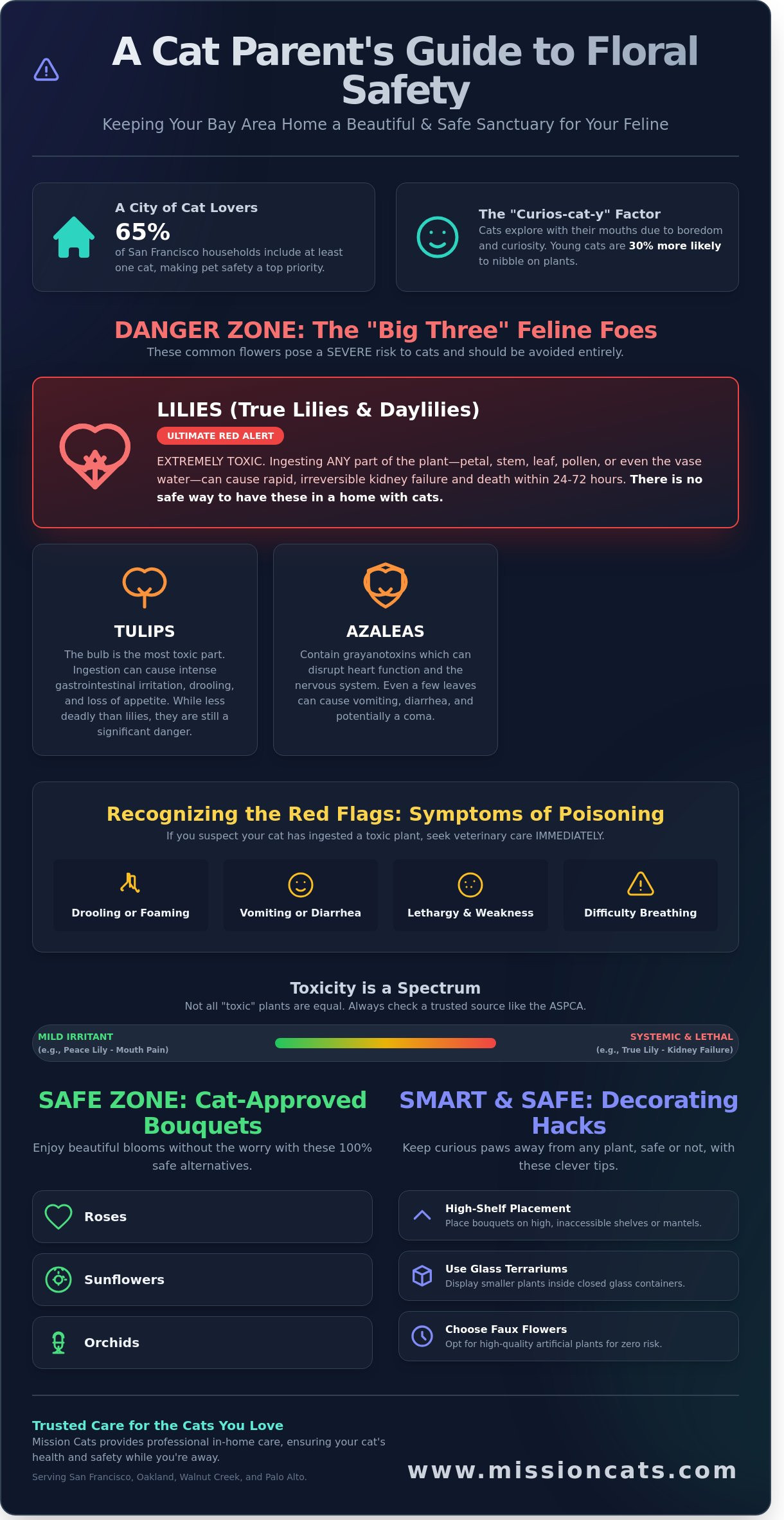
Recognizing the Red Flags: Symptoms of Floral Poisoning
If your VIP (Very Important Pussycat) decides to sample a centerpiece you just brought home from the Ferry Building, don’t play the waiting game. While some reactions to toxic flowers for cats happen in 15 minutes, others might take 48 hours to manifest. Waiting until a cat looks "really sick" is a dangerous gamble. Early intervention is the gold standard of care; it’s always better to call the vet for a false alarm than to miss a critical window for treatment.
The Digestive Distress Signal
Vomiting is often the first alarm bell. If your cat vomits three times in a single hour after a flower delivery, it’s an automatic trip to the emergency vet. You should also watch the litter box closely. Diarrhea or a total lack of output can signal that something is wrong internally. Then there’s ptyalism, or excessive drooling. If your cat is suddenly "leaking" from the mouth, it often indicates oral irritation or systemic distress from a nibbled leaf. These symptoms aren’t just messy; they’re clear indicators that your cat’s body is trying to expel a toxin.
Behavioral Shifts: When Your VIP Isn’t Acting Meow-velous
Cats are masters of disguise. In a cozy San Francisco flat, a sick cat won’t announce their pain; they’ll often retreat to a dark corner or hide under the bed for 6 hours straight. This hiding instinct is a natural survival mechanism. You should also look for lethargy, which is quite different from a standard 16 hour catnap. If your cat doesn’t wake up for their favorite treats or seems limp when you pick them up, they need immediate help.
Pay close attention to physical changes like a heart rate that feels racing or breathing patterns that seem shallow. A respiratory rate over 40 breaths per minute while resting is a critical indicator of distress. Since cats can also act strangely when they’re just grumpy, you can check our guide on stressed cat signs to help differentiate between a nervous kitty and one that’s physically ill from toxic flowers for cats. When in doubt, trust your gut. You know your cat’s purr-sonality better than anyone else, and a quick professional checkup provides the peace of mind every cat parent needs.
Trusted Care for the Cats You Love, Right at Home
When you travel, your cat deserves more than a quick check-in. Mission Cats In-Home Care provides reliable, loving, professional care in the comfort of your cat’s own home, so you leave with confidence and return to a calm, well-cared-for companion.
Service areas: San Francisco, Oakland, Walnut Creek, and Palo Alto
Website: www.missioncats.com
Email: missioncats@missioncats.com
Phone: (800) 580-5612, (415) 376-6082, (415) 437-2287
Oakland: (510) 315-6446, San Francisco: (415) 528-5471, Palo Alto: (650) 425-3444, Walnut Creek: (925) 376-1300
Floral Safety 101: Keeping Your SF Sanctuary Cat-Safe
Living in a cozy Mission District apartment or a light-filled Victorian doesn’t mean you have to sacrifice your botanical aesthetic. You just need a purr-sonalized approach to greenery. While we have already identified the most toxic flowers for cats, let’s focus on the meow-velous alternatives that keep your feline VIPs safe and your home smelling like a dream. Creating a cat-safe sanctuary is about being proactive rather than reactive.
Roses are the gold standard for cat-safe elegance. They provide a high-end look without the high-stakes risk. Sunflowers bring a bright, Golden Gate glow to any room and are completely non-toxic. For a touch of luxury, Orchids and Zinnias are fantastic choices that won’t send you racing to the emergency vet. If you want to go the extra mile for your feline friend, consider the "Cat Grass" distraction. By providing a dedicated pot of organic wheatgrass or oat grass, you give your cat a safe outlet for their grazing instincts. This redirect keeps their teeth off your decorative bouquets and on their own private salad bar.
Choosing Feline-Friendly Bouquets
When you are browsing the local flower markets, stick to the classics that play nice with paws. Roses are timeless; just make sure the florist removes every single thorn. Those sharp bits can cause nasty scratches on curious noses or throats if chewed. Orchids offer that high-end SF boutique vibe while remaining perfectly safe. If you’re looking for a pop of color, Zinnias are hardy and feline-friendly. Before you tap "buy" on that delivery app, always run the stems through the Pet Poison Helpline database. A quick 30-second search can prevent a major health crisis. For a deeper dive into making your home a fortress of feline health, check out our Cat Health and Safety Pillar.
Prevention Strategies for Busy Owners
Sometimes the most beautiful arrangement is still a temptation for a bored tabby. Use the "out of sight, out of mind" rule by placing vases inside glass terrariums or vintage birdcages. These look chic and act as a physical barrier. You can also use citrus peels or pet-safe bitter sprays around the base of your vases. Most cats find the scent of lemon or orange absolutely repulsive. Most importantly, educate your social circle. Tell your friends and family about your strict "no lily" policy for deliveries. Lilies are among the most toxic flowers for cats; even a small amount of pollen can be fatal. Clear communication ensures that every gift brought into your home is a safe one.
Let’s connect to ensure your cat has the best professional care while you are away from home!
Trusted Care for the Cats You Love, Right at Home
When you travel, your cat deserves more than a quick check-in. Mission Cats In-Home Care provides reliable, loving, professional care in the comfort of your cat’s own home, so you leave with confidence and return to a calm, well-cared-for companion.
Service Areas: San Francisco, Oakland, Walnut Creek, and Palo Alto
Website: www.missioncats.com
Email: missioncats@missioncats.com
Phone: (800) 580-5612, (415) 376-6082, (415) 437-2287
Oakland: (510) 315-6446, San Francisco: (415) 528-5471, Palo Alto: (650) 425-3444, Walnut Creek: (925) 376-1300
Mission Cats: Your Partner in Feline Health and Safety
Even the most diligent cat parent can’t be everywhere at once. While you’re enjoying a weekend in Napa or a business trip to New York, your home should remain a sanctuary. Our team understands that toxic flowers for cats aren’t just a hypothetical risk; they’re a real concern for curious whiskers. We don’t just "check in" on your pets. We act as their professional guardians, ensuring every leaf and petal stays out of reach while you’re away.
Our sitters are trained to monitor feline health with a level of detail that traditional boarding facilities simply can’t match. By providing care in your cat’s own kingdom, we avoid the stress of travel and strange environments, which often masks symptoms of illness. We focus on the "why" behind every behavior, ensuring your cat stays happy and hydrated.
Expert Eyes When You’re Away
Our 30-minute visits are designed to be meow-velous experiences that go way beyond filling a food bowl. We spend time learning your cat’s unique "normal," which allows us to spot the subtle cues that something might be wrong. A slight change in posture or a hidden retreat under the bed can be the first sign of a medical issue. Because we know your cat’s baseline, we catch these "un-fur-tunate" shifts immediately.
-
Force-free handling: We use gentle techniques for every personality, from the spicy Mission District tabby to the shyest kitten in Palo Alto.
-
Comprehensive health checks: Every visit includes a review of appetite, litter box habits, and general mood.
-
Individualized attention: We treat your pets like the VIPs (Very Important Pussycats) they are, providing the specific snuggles or playtime they crave.
Ready for Any Mission
If we suspect a feline friend has encountered toxic flowers for cats during a visit, we jump into action faster than a kitten chasing a laser pointer. We have established protocols for coordinating with your preferred veterinarian in San Francisco, Oakland, or the East Bay. Our local expertise means we know the quickest routes to 24/7 emergency clinics in your specific neighborhood.
If your vet suggests treatment, our team has extensive expertise in administering oral medication without the drama. We use low-stress methods that keep your cat calm and comfortable. You can travel with total confidence knowing a professional who speaks cat fluently is on the case. Get started today and give your cat the boutique care they deserve.
Trusted Care for the Cats You Love, Right at Home
When you travel, your cat deserves more than a quick check-in. Mission Cats In-Home Care provides reliable, loving, professional care in the comfort of your cat’s own home, so you leave with confidence and return to a calm, well-cared-for companion.
Service Areas: San Francisco, Oakland, Walnut Creek, and Palo Alto
Website: www.missioncats.com | Email: missioncats@missioncats.com
Contact: (800) 580-5612, (415) 376-6082, (415) 437-2287
Oakland: (510) 315-6446 | San Francisco: (415) 528-5471 | Palo Alto: (650) 425-3444 | Walnut Creek: (925) 376-1300
Sprout Safety in Your San Francisco Sanctuary
Keeping your Mission District flat or Pacific Heights home safe doesn’t mean you have to skip the greenery. It just means being a savvy cat parent. Avoiding toxic flowers for cats like lilies and azaleas is the first step in preventing a floral emergency. If your feline friend ever gets too curious, recognizing symptoms like lethargy or vomiting early can save your Very Important Pussycat’s life.
Mission Cats has been the trusted partner for thousands of Bay Area families since 2015. Our expert staff specializes in force-free handling and complex medical care, including Sub-Q fluids and insulin administration. We’re here to make sure your home remains a meow-velous sanctuary while you’re away. We’ve seen it all and handled it all with a calm, cat-obsessed touch.
Let’s connect and ensure your cat has a safe, purr-fectly cared-for home!
Trusted Care for the Cats You Love, Right at Home
When you travel, your cat deserves more than a quick check-in. Mission Cats In-Home Care provides reliable, loving, professional care in the comfort of your cat’s own home, so you leave with confidence and return to a calm, well-cared-for companion.
Service areas: San Francisco, Oakland, Walnut Creek, and Palo Alto. Website: www.missioncats.com. Email: missioncats@missioncats.com. Phone: (800) 580-5612, (415) 376-6082, (415) 437-2287. Oakland: (510) 315-6446. San Francisco: (415) 528-5471. Palo Alto: (650) 425-3444. Walnut Creek: (925) 376-1300.
Frequently Asked Questions
Is every part of a lily toxic to my cat?
Yes, every single part of a true lily is lethal, including the petals, leaves, and even the pollen. According to the Pet Poison Helpline in 2024, a cat can suffer total kidney failure just by licking a few grains of pollen off their fur or drinking the water from a vase. If you’re looking for feline-friendly alternatives, stick to orchids or sunflowers to keep your home safe and stylish.
What should I do if I catch my cat eating a toxic flower?
Call your veterinarian or the ASPCA Animal Poison Control Center at (888) 426-4435 immediately. Do not wait for symptoms to appear, as internal damage often starts before your cat looks sick. Grab a sample of the plant or take a photo of the flower to help the vet identify the specific toxic flowers for cats involved; this ensures your VIP gets the right treatment without delay.
Are there any flowers that are safe for both cats and dogs?
Sunflowers, Snapdragons, and Zinnias are fantastic, safe choices for multi-pet households. The ASPCA non-toxic list for 2025 confirms these blooms won’t cause harm if your curious companion decides to take a nibble. These meow-velous options let you enjoy a colorful home without worrying about a late-night trip to the emergency clinic. They’re the perfect way to brighten up a Mission District apartment safely.
Can cats get sick just from smelling toxic flowers?
Most cats won’t get sick from a quick sniff, but the real danger lies in the pollen that sticks to their whiskers and fur. When they groom themselves later, they ingest those toxins directly. This is why keeping toxic flowers for cats out of the house is the only 100 percent effective way to prevent accidental poisoning. It’s better to be safe than sorry when it comes to your kitty’s health.
Which Bay Area emergency vets should I have on speed dial?
Keep the numbers for VCA San Francisco Veterinary Specialists on Alabama Street and SAGE Veterinary Centers in Redwood City saved in your phone. BluePearl in Daly City is another reliable 24-hour option for San Francisco pet parents. Having these contacts ready saves precious minutes when every second counts. These facilities have the advanced equipment needed to handle serious toxicity cases around the clock.
How can a cat sitter help if my cat is on medication for poisoning?
A professional cat sitter provides the consistent care needed to manage strict medication schedules while you’re at work or away. At Mission Cats, we are experienced in administering pills and monitoring for subtle behavioral changes. We ensure your cat stays on their recovery path in the comfort of their own home. This gives you total peace of mind while your feline friend heals in their favorite sunbeam.
Are roses actually safe for cats, or is that a myth?
Roses are technically non-toxic, but they still pose a physical risk due to their sharp thorns. While the petals won’t poison your cat, a swallowed thorn can cause serious punctures or obstructions in the digestive tract. If you bring roses home, ask your florist to strip the stems completely to keep your playtime sessions safe. It’s a simple step that makes a big difference for your cat’s safety.
What is the most common toxic plant found in San Francisco gardens?
Azaleas and Rhododendrons are the most frequent offenders found in local landscapes from the Richmond to the Sunset district. These hardy shrubs contain grayanotoxins that can disrupt a cat’s sodium channels, leading to vomiting or even coma. San Francisco gardens often feature these because they love our foggy microclimates. Keep a close eye on your outdoor explorers to ensure they don’t snack on these common backyard bushes.
Trusted Care for the Cats You Love, Right at Home
When you travel, your cat deserves more than a quick check-in. Mission Cats In-Home Care provides reliable, loving, professional care in the comfort of your cat’s own home, so you leave with confidence and return to a calm, well-cared-for companion.
Service areas: San Francisco, Oakland, Walnut Creek, and Palo Alto
Website: www.missioncats.com
Email: missioncats@missioncats.com
Phone: (800) 580-5612, (415) 376-6082, (415) 437-2287
Oakland: (510) 315-6446
San Francisco: (415) 528-5471
Palo Alto: (650) 425-3444
Walnut Creek: (925) 376-1300

Article by
Drea Finch
Drea Finch is a trusted feline care professional whose expertise in cat husbandry is rooted in over 30 years of hands-on experience, careful observation, and a deep respect for the unique needs of cats and the people who love them. She has built a reputation for providing calm, consistent, and thoughtful care that supports feline health, comfort, and emotional well-being.
Drea understands that cat husbandry involves far more than food, water, and litter. It requires close attention to behavior, routine, environment, and subtle changes that may signal stress, discomfort, or a need for added support. She is highly attuned to the details many overlook, including shifts in appetite, grooming, vocalization, energy, litter box habits, and social behavior. This observant and disciplined approach allows her to provide care that is both responsive and steady.
Her work is guided by patience, cleanliness, and respect for each cat’s individuality. She knows that cats thrive on predictability and that maintaining routine is often essential to their sense of security. Whether caring for shy cats, seniors, multi-cat households, or cats with strong preferences and sensitivities, Drea brings a calm presence and sound judgment to every situation.
She also understands the importance of the home environment in feline well-being. From feeding stations and litter maintenance to enrichment, play, and quiet reassurance, Drea approaches care with a cat-centered mindset that helps preserve comfort and reduce stress. She values trust, clear communication, and dependable follow-through, giving clients confidence that their beloved companions are in capable hands.
Drea Finch’s expertise in cat husbandry reflects more than affection for animals. It reflects discipline, insight, and a professional standard of care grounded in consistency, respect, and genuine commitment. Her work helps cats remain healthy, settled, and well cared for, while giving their people peace of mind.
MCIHC Disclaimer
This article is for general informational purposes only and does not constitute veterinary, medical, legal, or professional advice. Reading this content does not create a client relationship with Mission Cats In-Home Care. Because every cat and household is different, please consult a licensed veterinarian or qualified professional for advice specific to your situation. While we aim for accuracy, Mission Cats In-Home Care makes no warranties regarding the completeness, reliability, or suitability of this information and is not responsible for third-party content, links, products, or services referenced unless expressly stated. Testimonials and examples are illustrative only and do not guarantee similar results.